How To Pick The Best Luggage Storage Spot In New York
Searching for the best luggage storage in New York usually returns a wall of near-identical cards. The honest way to choose is a decision rule: price you can verify, hours that match your day, coverage you have actually read, and a location that sits on your route, not across town.
Short answer
The best New York bag drop for most travellers is a staffed point near a station at $4.90 per bag per day plus a $1.99 checkout fee, $6.89 all in for one day. Penn Station offers 27 points within 800 metres rated 4.84 across 3,583 reviews; Amtrak's own counter charges $20 or $30 per item per 24 hours.
What Does "Best" Actually Mean For Luggage Storage In New York?
The best luggage storage spot in New York is the one that satisfies four checks in order: a price you can verify before paying, opening hours that cover both your drop-off and your pick-up, a coverage policy you have actually read, and a location within a short walk of a place you will already be. Rank them that way and most of the apparent choice disappears.
Most people arrive at this search after typing a phrase like "best luggage storage nyc" into a search engine, and what they get back is a grid of cards that all look suspiciously similar. Same headline price. Same promise of security. Same stock photo of a suitcase. The cards are similar because most of them are the same underlying network, a single operator whose New York inventory this site has measured at 178 distinct points, resold through area pages that overlap heavily. An operator's area page can show cards anchored elsewhere in the city, so judge each point by its own address and its walking distance from where you will be, and rely on this site's per-area counts rather than a citywide total.
That is why "best" cannot be a brand name. It has to be a rule you apply to whatever card is in front of you. This guide builds that rule from the numbers this site has verified directly: what storage really costs in New York, which neighbourhoods have genuine density, what the coverage actually says, and which options sound plausible but do not exist. If you want the short version of the underlying mechanics, the guide on how a New York bag drop works walks through the booking and hand-over step by step.
One framing note before the numbers. The word "best" implies a winner. In a city where the transport hubs publish no lockers of their own, the real winner is whichever staffed counter is closest to your day's route at a price you confirmed in advance. Everything below is about finding that counter quickly and avoiding the traps that cost money or, worse, a morning.
How Much Should You Expect To Pay Per Bag?
Expect $4.90 per bag per day plus a $1.99 per-bag checkout fee, which is $6.89 all in for one bag for one day and $16.69 for three days, because the fee is charged once per bag rather than per night. The advertised $2.90 rate exists at only two known points near Central Park; everywhere else in the network the card shows $4.90.
The price layer is where the "best" search does its worst damage, because the headline number and the paid number are different things. This site counted the day rate on 168 of the operator's 178 real New York point cards and found $4.90 on every one of them, 94.4 percent of the network. The $2.90 string appears in the operator's marketing, and the operator now says so itself: its New York page states that $2.90 "is the lowest currently available city price, not a promise that every location or bag category has the same rate." That is the company disclaiming its own headline, which is as clean a signal as you will get. On this site's own roster, the cheaper rate exists at exactly two points, 72 St Subway Station and Cathedral Pkwy / 110 St near Central Park, and nowhere else.
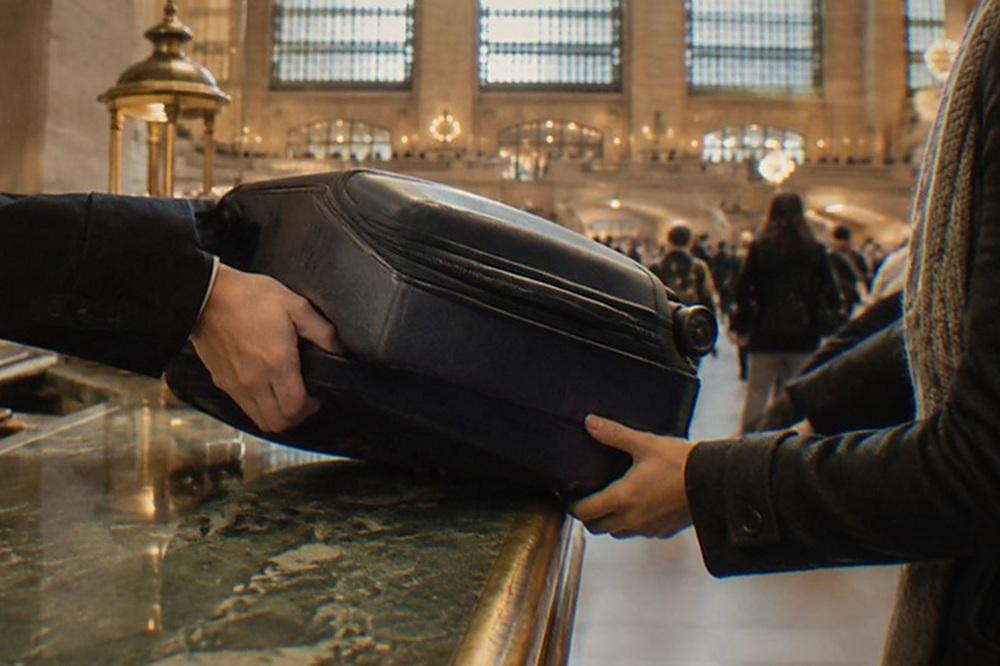
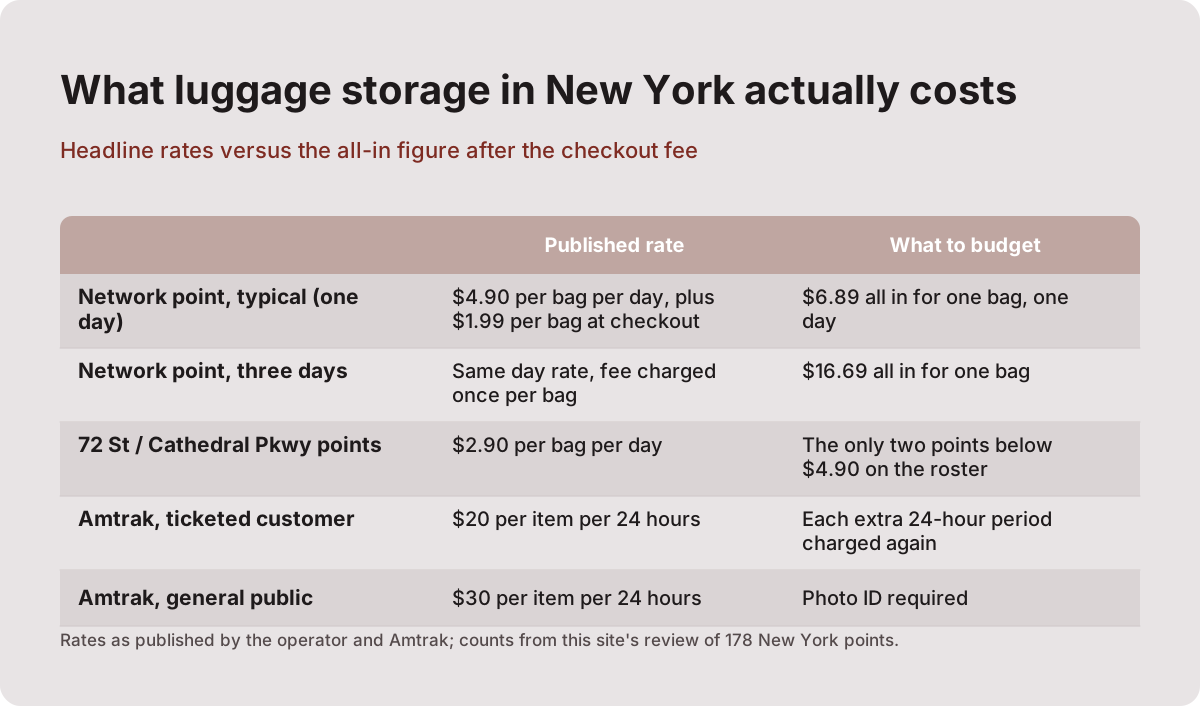
Then there is the checkout fee. A $1.99 fee per bag is added at checkout, and it is not itemised on the area pages you browse before booking. So the honest comparison number, the one you should hold in your head while you compare cards, is $6.89 for one bag for one day. Stretch the stay and the arithmetic stays favourable: three days is $16.69, because the per-bag fee is charged once, not nightly. The table below puts the network rate beside the alternatives, using only figures the operators themselves publish or that this site has measured.
| Option | Published rate | What to budget |
|---|---|---|
| Network point, typical | $4.90 per bag per day, plus $1.99 per bag at checkout | $6.89 all in for one bag, one day |
| Network point, three days | Same day rate, fee charged once per bag | $16.69 all in for one bag |
| 72 St / Cathedral Pkwy points | $2.90 per bag per day | The only two points below $4.90 on the roster |
| Amtrak, ticketed customer | $20 per item per 24 hours | Each extra 24-hour period charged again |
| Amtrak, general public | $30 per item per 24 hours | Photo ID required |
Compare that with the one true station-run service in Manhattan. Amtrak's temporary bag storage at Penn Station and Moynihan Train Hall charges $20 per item per 24 hours for Amtrak customers with a valid ticket, and $30 per item per 24 hours for the general public with photo ID, with each additional 24-hour period charged at the start of the period. For one bag for a few hours, the staffed network around a station wins on price by a wide margin. For three bags, or a very long day, the gap narrows enough that the Amtrak counter's official standing becomes worth its premium. The full pricing picture, including what the fee does and does not cover, is in what luggage storage costs in New York City.
Which Neighbourhoods Actually Have The Density You Need?
Density decides convenience: Times Square has 44 storage points within 800 metres of its anchor, Port Authority 36, Central Park 33 and Penn Station 27, while the World Trade Center has just 4, so a Midtown drop gives you choice and backup while a Financial District drop gives you neither. Ratings cluster tightly, from 4.7 to 4.84, so location beats a fractional rating difference every time.
The single most useful number on any storage card is not the rating. It is how many points sit within walking distance of where you will actually be, because a dense cluster means competition on hours, a backup if your first choice is full, and a shorter walk with the bag you are trying to get rid of. This site counts points within 800 metres of each area's geocoded anchor, which is the only count that means anything: an operator's own area pages may list points anchored elsewhere in the city, so judge each point by its own address and walking distance.
| Area | Points within 800 m | Rating | Reviews | Points publishing hours |
|---|---|---|---|---|
| Times Square | 44 | 4.79 | 2,400 | 42 |
| Port Authority | 36 | 4.79 | 2,126 | 34 |
| Central Park | 33 | 4.79 | 762 | 33 |
| Penn Station | 27 | 4.84 | 3,583 | 25 |
| Midtown Manhattan | 16 | 4.7 | 596 | 15 |
| Grand Central | 14 | 4.7 | 502 | 13 |
| Brooklyn | 11 | 4.82 | 79 | 11 |
| World Trade Center | 4 | 4.72 | 201 | 4 |
Read the table as a decision tool, not a leaderboard. If your day is a Broadway show and a museum, the Times Square cluster puts dozens of counters within a few blocks and 42 of its 44 points publish their hours, so you can filter for late pick-up before you commit. If you are arriving at Penn Station and leaving from there, the 27-point Penn cluster, the best-rated in the city at 4.84 across 3,583 reviews, means you never carry the bag more than a block or two. If your day ends downtown, the World Trade Center's four points are perfectly usable, but you should confirm hours and book ahead, because four points means no slack if one closes early.
The station comparison deserves its own mention, because most storage days in New York start or end at a terminal. Grand Central itself has no storage of any kind, its own FAQ says so flatly, but 14 network points sit within 800 metres of it. The Port Authority Bus Terminal likewise provides no storage, per the Port Authority's own statements in two places, yet 36 points surround it. The full breakdown is in Penn Station vs Grand Central vs Port Authority.
What Protects Your Bag While It Is Stored?
Each bag stored through the network is covered by a guarantee the operator values at EUR 3,000 per bag, with the same figure as the per-claim cap, but the terms prohibit storing electronics entirely, and a prohibited item voids the whole claim. The marketing figure of $10,000 appears nowhere in the terms, and the guarantee is not insurance.
This is the layer almost nobody reads until something goes wrong, and it is where the "best" search most needs a rule. The operator's terms are explicit that the guarantee is not insurance, that the operator may withdraw it, and that claims face a one-week deadline plus a 48-hour deadline for a police report. The prohibited items clause is the one that bites hardest in practice: the terms list, verbatim, "Technological material (iPhone, iPad, Tablet, PC, smartphones)". If you store a bag containing a laptop and the bag is lost or damaged, the prohibited item voids the entire claim, not just the laptop's share. The details, clause by clause, are laid out in what the Radical Storage guarantee actually covers, and the operator's own terms are published at radicalstorage.com/terms-and-conditions.

So the second decision rule is a packing rule. Before you choose a spot, decide what goes in the bag: clothes, shoes, books and toiletries are unproblematic; phones, tablets and laptops should travel with you, not into storage. This is also where the staffed-counter model earns its keep. Every one of the 178 network points in New York is a staffed counter, a shop, cafe or hotel desk where a person takes the bag and tags it, not an unattended machine in a corridor. Zero of the 178 is a locker.
The marketing-versus-terms gap on the guarantee is worth naming plainly, because you will see the bigger number in ads. The operator's New York page advertises a "$10,000 security guarantee" in one place and an "EUR 10,000 guarantee" in another, on the same page, while the binding terms say EUR 3,000 per bag and per claim. When a company prints two currencies for its own headline figure, the document that governs your booking is the one to believe. It is also worth knowing that the terms carry no version date at all, so there is no way to tell from the page when they last changed.
Do The Opening Hours Match Your Actual Day?
Hours are the quiet dealbreaker: the drop that opens at 9 am is useless for an 8 am museum entry, and the one that closes at 6 pm cannot hold your bag through an evening show, so always filter for a point whose published hours cover both ends of your day. On this site's roster, 25 of Penn Station's 27 points publish hours, as do 42 of Times Square's 44.
The arithmetic of a storage day is simple but easy to get wrong. Count backwards from your pick-up moment, not your drop-off. If your flight leaves at 9 pm and you want the bag by 7 pm, you need a point open until at least 7 pm, with margin for the walk. If you are dropping at 8 am before a museum opens, you need a point that starts early, and in New York many shops do not. The roster makes this checkable: every area page here shows which points publish hours, and the counts are high, but the individual hours vary, so the card is the place to look.
The station-run alternative has its own clock. Moynihan Train Hall publishes its own hours as 5:00 am to 1:00 am daily, with Amtrak and LIRR services moving across the avenue to Penn Station between 1:00 am and 5:00 am. That is the hall's hours, not the storage counter's, which Amtrak publishes separately nowhere. The checked baggage window at New York Penn runs 5:00 am to 10:00 pm. So if your day ends after 10 pm and starts before 5 am, the staffed network's late points, not Amtrak, are the realistic option. The overnight and multi-day angles, including what happens when a pick-up slips past closing, are covered in overnight and multi-day bag storage in NYC.
One more timing trap: a review pattern this site found in traveller reporting is that the storage network does not share even an approximate storage address until after you have paid. You book an area, not a street corner. That is workable, but it means the hours check matters more, not less, because you cannot walk past the shop the day before and read the door. The guide on what travellers report about NYC bag storage collects the recurring experience themes.
What Should You Rule Out Before You Book Anything?
Rule out three things on sight: any option described as a station locker, because no New York transport hub publishes one; any plan to leave the bag at a venue, because Yankee Stadium, the Empire State Building and most observation decks state they have no storage; and any parcel locker on a sidewalk, because the city's own LockerNYC network is for package pick-ups only.
The locker myth is worth five minutes of your attention because this site's domain name is a question, and the honest answer is that New York has almost no public luggage lockers. The transport hubs publish none: Grand Central's FAQ says no, the Port Authority says no in two places, and the subway system's rulebook contains no storage provision at all. The genuine lockers that do exist are real but irrelevant to a suitcase: coin lockers at the Statue of Liberty monument that hold only what you are already carrying, because luggage cannot board the ferry in the first place, and the American Museum of Natural History's day lockers, which are for coats and day bags and refuse luggage at the door. The full inventory, including the tennis centre permits, is in which New York places have luggage lockers and which have none.

The sidewalk lockers deserve their own paragraph because they look like exactly what you want. New York City really does run a public self-service locker network on its own sidewalks, but the operator's page for the programme describes it as "secure self-service access points designed to facilitate the collection of packages from online orders from multiple LockerNYC partners". Parcels, not suitcases. The city's locker programme is a delivery infrastructure, and nothing on it invites a traveller's bag.
Venues are the other false lead. Yankee Stadium's policy is unambiguous: one MLB-compliant soft-sided bag no larger than 16 by 16 by 8 inches, hard-sided bags prohibited, and "there is no storage area for any items at Yankee Stadium", per the stadium's own policies page. The Empire State Building states there are no locker or storage facilities on site. One World Observatory, Top of the Rock and Madison Square Garden all publish the same position. So the plan of "carry the suitcase to the venue and figure it out there" fails at the door, and the bag needs a home before you queue. The per-venue rules are collected in observation deck and monument bag rules.
| Ruled-out option | Why it fails | What the source says |
|---|---|---|
| Station lockers | No hub publishes any | Grand Central and Port Authority FAQs both say no storage |
| Sidewalk parcel lockers | Packages only, by design | Operator page limits them to online-order collection |
| Venue bag check | Most venues refuse luggage | Yankee Stadium: "no storage area for any items" |
| Subway platform | No storage provision exists | MTA rulebook contains none |
| Hotel you are not staying at | No entitlement | One New York hotel limits storage to registered guests only |
The hotel row needs its honest caveat. No New York hotel publishes a policy on holding bags for people who are not staying there, and the closest thing found is one property, The New Yorker, whose FAQ states luggage storage is available "for Registered Guests only" at $5 per bag. Your own hotel is a different matter: many hold bags for guests before check-in and after check-out, and Broadway Plaza Hotel publishes a full policy, two bags free then $5 per bag, before check-in and on departure day only. Ask yours, but never assume a non-guest arrangement exists. The hotel picture is in nyc hotel check-in and checkout times.
How Do You Carry The Bag To The Drop In The First Place?
The MTA has no suitcase size limit at all: the only dimension in its rules is thirty inches, and it applies to wheeled carts, not luggage, so a suitcase of any size may ride the subway, with fines of $50 to $100 for blocking seats, doors or passenger traffic. The agency's own advice is to avoid carrying more than you can manage and to dodge rush hour.
This matters for choosing a spot because the walk from the subway to the counter is part of the cost. A point 800 metres from your station is a ten-minute drag with a heavy case, and the MTA's rider guide says it plainly: "Don't travel with more than you can carry on your own, and avoid rush hour if you're transporting something big." The rules behind that advice are real and priced: obstruction of seating, facilities, elevators or escalators carries a $50 fine, obstruction of operations or traffic $100, and carrying an obstructive object $75, per the MTA's published rules and fine schedule. The rulebook's only measurement, thirty inches in length or width, governs wheeled carts.
The commuter rail picture is firmer still. The LIRR's current City Terminal timetable publishes its own luggage rule: luggage belongs in overhead racks, must not take up seat space or block aisles and doorways, may not be left unattended, and bags are subject to random search by MTA police. That is the railroad telling you, in effect, that a stored bag is a better plan than a hauled one. The full transit picture is in taking luggage on the subway and commuter rail.
A Five-Minute Checklist Before You Book
Run five checks in order: confirm the all-in price is $4.90 plus $1.99 per bag, confirm the point's published hours cover your pick-up time, confirm the walk from your route is short, remove electronics from the bag, and only then book. If any check fails, move to the next point in the cluster, because in Times Square or Penn Station there are dozens.
The checklist compresses everything above into something you can do on a phone in a couple of minutes. Price first, because the headline rate is not the paid rate and the difference is a flat, knowable $1.99 per bag. Hours second, because a closed counter at pick-up time turns a good price into a ruined evening. Location third, measured from your actual route, not from the city's centre: a point near Penn Station is wrong for a Brooklyn day and right for an Amtrak departure. Contents fourth, because the electronics prohibition is the single most consequential line in the terms. Booking last, and only for the point that passed all four.
| Check | What to look for | Why it matters |
|---|---|---|
| All-in price | $4.90 per bag per day plus $1.99 per bag | The fee is not shown on the browsing cards |
| Hours | Published hours covering drop-off and pick-up | 25 of 27 Penn points publish hours; check yours |
| Location | Within a short walk of your route | Density gives backup: 44 points near Times Square |
| Contents | No phones, tablets or laptops in the bag | Prohibited electronics void the whole claim |
| Booking | Book only after all four checks pass | Clusters let you switch points cheaply |
Two final habits make the day smoother. Photograph the bag before you hand it over, and keep the booking confirmation and the tag number together on your phone, because the claim process, if you ever need it, runs on deadlines measured in days and a police report deadline measured in hours. And when your pick-up is late at night or before dawn, remember that Moynihan Train Hall itself shuts between 1:00 am and 5:00 am, so a network point with evening hours beats the station counter for odd-hour days. For the mechanics of the hand-over itself, how left luggage works in New York covers the sequence from booking to claim check.
The honest summary of the whole "best" question is that this site, Luggage Storage Lockers in New York City, was built around a finding, not a brand: New York's stations have no lockers, but they are ringed by staffed counters at a knowable price, and the best one is whichever passes the five checks above on your route. Penn Station's cluster, 27 points rated 4.84 across 3,583 reviews, is the strongest single cluster in the city; Times Square's is the biggest; and the two $2.90 points near Central Park are the only genuine bargains on the roster.
If Penn is not on your route, the same five checks apply unchanged to the other clusters. Port Authority's 36 points, rated 4.79 across 2,126 reviews, cover the west side and the bus terminal's dead zone, while the World Trade Center's four points, rated 4.72 across 201 reviews, serve Lower Manhattan with no slack for error, so book ahead there and confirm hours before you commit. The rule travels better than any brand does: price, hours, location, contents, then book.
Common Questions About Choosing A Luggage Storage Spot In New York
What is the best luggage storage in NYC?
There is no single best spot, only a best-fit spot: a staffed point within a short walk of your route, at $4.90 per bag per day plus the $1.99 checkout fee, with published hours covering your pick-up. Penn Station's cluster of 27 points, rated 4.84 across 3,583 reviews, is the strongest single cluster; Times Square has the most points at 44.
How much does luggage storage cost in New York?
The typical network rate is $4.90 per bag per day plus a $1.99 per-bag checkout fee, so $6.89 all in for one bag for one day and $16.69 for three days. Amtrak's counter at Penn Station charges $20 per item per 24 hours for ticketed customers and $30 for the general public.
Are there cheap $2.90 storage points in New York?
Two exist on this site's roster, at 72 St Subway Station and Cathedral Pkwy / 110 St near Central Park. Everywhere else the card shows $4.90. The operator itself now says $2.90 is a floor and "not a promise that every location or bag category has the same rate."
Can I leave electronics in a stored bag?
No. The operator's terms prohibit storing "Technological material (iPhone, iPad, Tablet, PC, smartphones)", and a prohibited item voids the entire claim if the bag is lost or damaged. Carry your devices with you and store the rest.
Is a station locker ever an option in New York?
No New York transport hub publishes a locker bank. Grand Central's FAQ says no storage exists there, the Port Authority says the same in two places, and the subway rulebook contains no storage provision. Every one of the 178 network points in the city is a staffed counter.
What should I check before booking a storage point?
Five things: the all-in price including the $1.99 fee, the point's published hours against your pick-up time, the walking distance from your route, that the bag contains no electronics, and that you have the booking confirmation saved. Only book the point that passes all five.