Are Luggage Lockers In NYC Safe
The honest answer on luggage locker safety in New York: what the Radical Storage Guarantee covers, what its terms exclude, and what a staffed counter does that a locker does not.
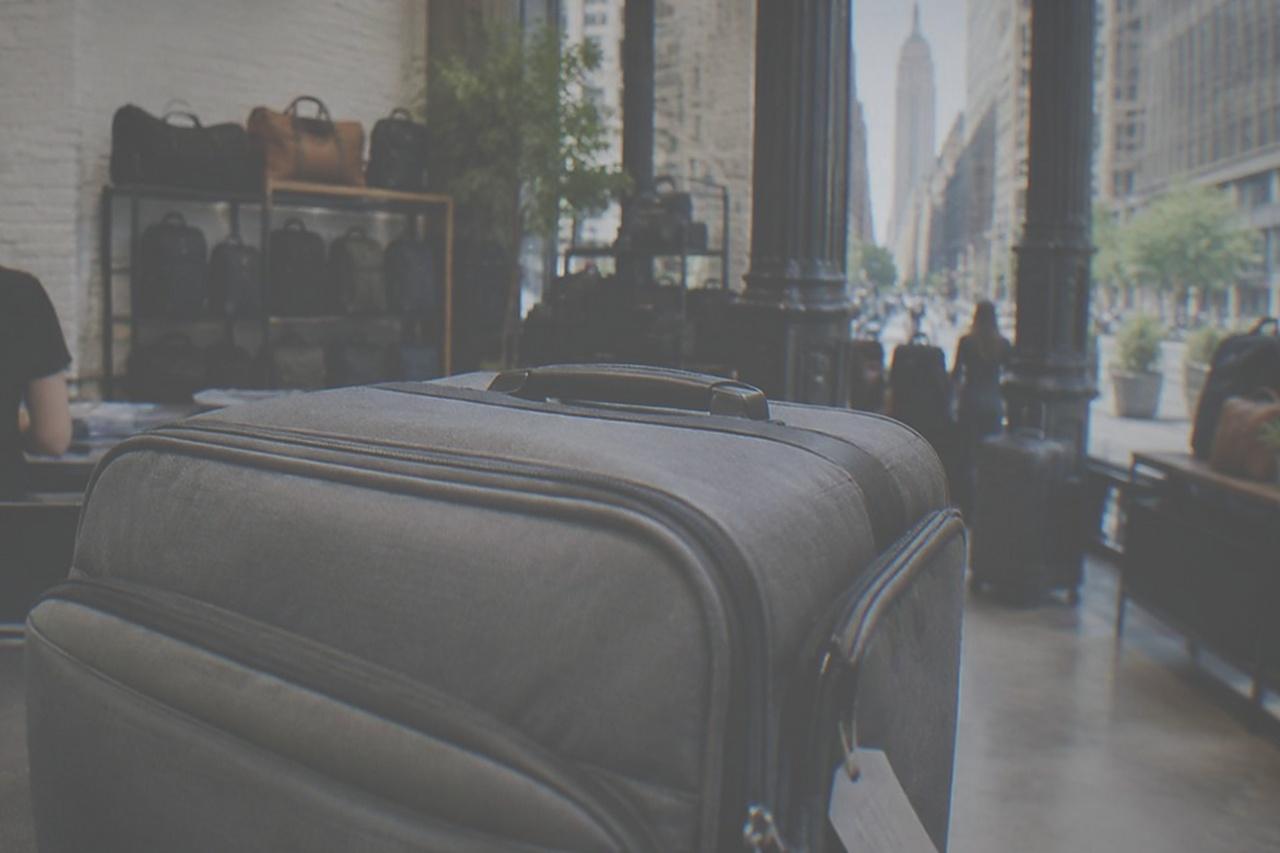
Are Luggage Lockers In NYC Safe
The honest answer is that the question is mostly misdirected, because New York has almost no public luggage lockers to be safe or unsafe. Every one of the 88 storage points this site lists is a staffed counter, and zero of the 178 Radical Storage points in the city is a locker. Safety in practice means a person behind a counter, terms you have read, and a guarantee whose value and exclusions you know before you pay.
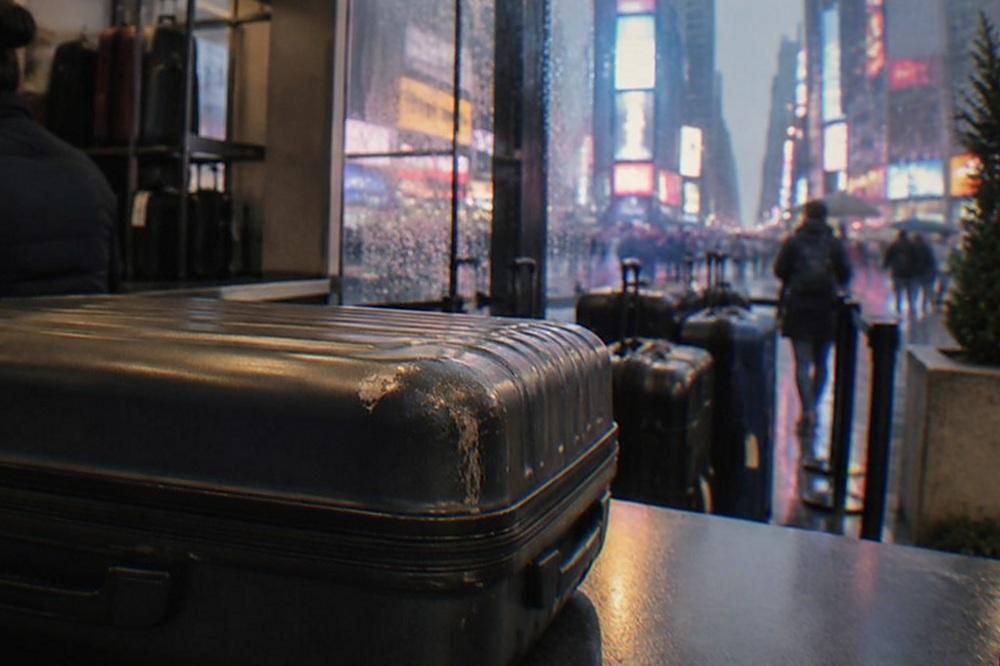
That misdirection matters, because the word "locker" carries a specific mental picture: a metal box, a padlock, nobody watching. In New York that picture is almost entirely fiction. The genuine self-service locker banks that exist in the city are not luggage options at all. NYC Parks sells seasonal locker permits at the Central Park Tennis Center for $20.00 per season, first come first served, for tennis players. The City's own sidewalk locker network, LockerNYC, is run with GoLocker and is explicitly for parcels: the operator's own words limit the lockers to "secure self-service access points designed to facilitate the collection of packages from online orders from multiple LockerNYC partners". Neither takes a suitcase, and neither is pretending to.
What a traveller in New York actually books is a staffed counter: a shop, a cafe, a hotel desk or a delivery service that takes your bag, tags it and keeps it behind the counter. The safety question is therefore not "can this metal box be broken into" but "will this business still have my bag when I come back, and what happens if it does not". Those are answerable questions, and the answers are better than most people expect.
If you are one click from booking, the three options below are a reasonable shortlist: a station-area spread with a large review pool, a bus-terminal alternative, and a small Lower Manhattan cluster.
What A Staffed Counter Does That A Locker Does Not
A staffed counter puts a named human between you and your bag: someone who hands it over, tags it, records the drop-off and is physically present all day. It creates accountability a locker cannot, because the counter operates under the operator's guarantee and the shop's own business licence, and a person can refuse a bag that looks wrong. A locker offers none of that; it offers only a lock.
The difference shows up in the details of how a drop-off works. At a staffed point you hand the bag over, it gets a tag, and you get a receipt or a booking reference. The person behind the counter sees every drop and every pickup, which is a level of informal surveillance no locker bank matches. When you come back, someone checks your reference before the bag moves. The how a New York bag drop-off works guide walks through the full sequence, including what to photograph and what to ask at the counter.
The review pools back this up. The Penn Station area alone lists 27 storage points within 800 m of the station, rated 4.84 across 3583 reviews, and 25 of those points publish their opening hours. Port Authority lists 36 points within 800 m, rated 4.79 across 2126 reviews. Those are not small samples, and they are reviews of the exact thing a nervous reader is checking: did the bag come back.
Staffed counters also have a rule a locker does not: someone can say no. Radical Storage's terms prohibit certain items outright, which means the person at the counter is your first line of defence against storing something the guarantee would not cover anyway. A locker takes whatever fits.
Penn Station's cluster is the deepest bench in the city, and the one most readers comparing safety will look at first.
What The Radical Storage Guarantee Actually Covers
The guarantee is worth EUR 3,000 per bag, capped at EUR 3,000 per claim, and it is not insurance. The operator's own terms say the company may withdraw it, that claims must be filed within one week, and that a police report is required within 48 hours. Marketing pages show larger figures in two currencies on the same page, but the binding number is the one in the terms.
This is the part of the safety question most readers get wrong, because the number most people have seen is the marketing number. Radical Storage's New York page advertises the guarantee twice with different currency symbols: the header strip reads "EUR 10,000 guarantee" and the body reads "Every booked bag is covered by a $10,000 security guarantee". The terms and conditions page, which is the document that actually binds a booking, reads "Each Bag is covered with a Radical Storage Guarantee for a value of EUR 3000" and "the Company will pay up to a maximum of EUR3000 per claim". The strings 10,000 and $10,000 appear nowhere in the terms.
So the honest framing is: the guarantee is real, it is per bag, and it is worth EUR 3,000. It is not insurance, a point the terms make themselves, and the operator may withdraw it. Claims have a one-week deadline and a 48-hour police-report deadline, which means the practical safety advice is simple: if a bag does not come back, you do not have weeks to mull it over, you have days. The what the Radical Storage Guarantee actually covers guide takes the terms apart clause by clause.
Worth knowing before you book, in one place:
What The Terms Exclude, And Why That Decides The Safety Question
The exclusions matter more than the headline value. Electronics are prohibited outright: the terms list "Technological material (iPhone, iPad, Tablet, PC, smartphones)" among items not accepted for storage at all, and a prohibited item voids the entire claim. Store the suitcase, not the laptop inside it, and the guarantee stands. Store the laptop and lose the bag, and you have no claim.
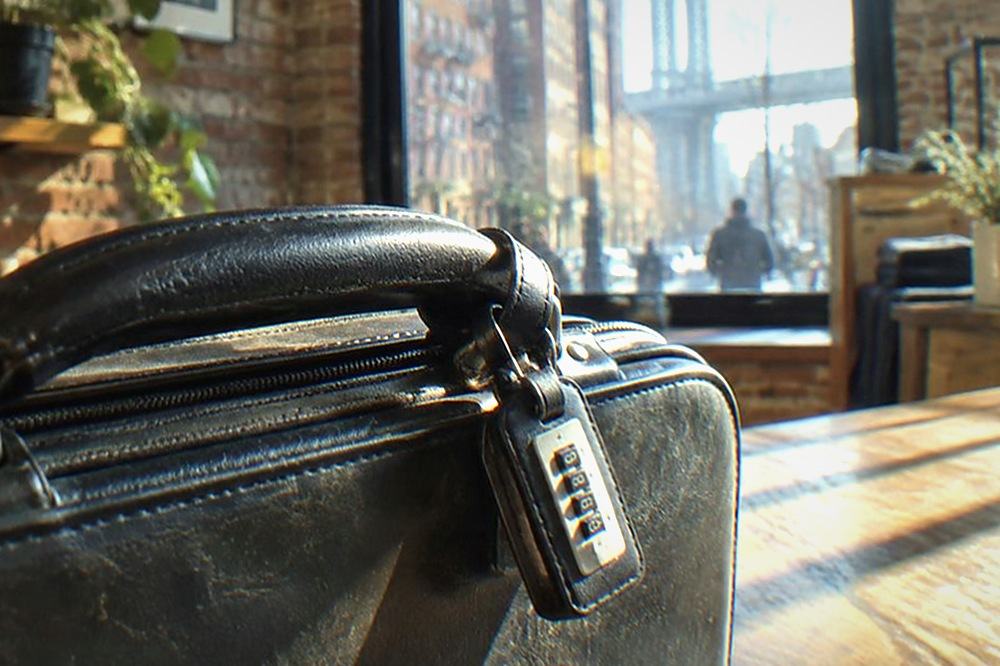
This single clause is the most useful safety information on the page, because it converts an abstract worry into a packing decision. A bag of clothes is a low-risk item under any storage arrangement: it is not prohibited, its replacement value sits far below the EUR 3,000 cap, and a claim for it is straightforward. A bag containing a phone, a tablet and a laptop is a different object entirely, because the terms do not merely reduce coverage for those items, they refuse them. The what you cannot leave in a stored bag in New York guide lists the full prohibited set.
The pattern repeats across the whole record. Amtrak's bag storage at Penn Station, at $20 per item per 24 hours for Amtrak customers and $30 for the general public with photo ID, prices "per item" and publishes no dimension limit, but the airline-style logic holds everywhere: carry the valuables, store the bulk. At JFK, Smarte Carte's counters require photo ID and a boarding pass, screen every bag in accordance with TSA safety guidelines, and tell you in plain words "All Bags Must Be Locked", which is an operator saying bring your own lock, a genuinely useful practical line. The wider set of guides lives on Luggage Storage Lockers in New York City.
| Safety factor | Staffed counter (typical NYC point) | Self-service locker |
|---|---|---|
| Human present | Yes, during published hours | No |
| Bag tagged and referenced | Yes | No, your lock is the only control |
| Operator guarantee | EUR 3,000 per bag, terms apply | None offered by NYC networks |
| Prohibited items refused | Yes, at the counter | A locker accepts whatever fits |
| Photo ID requirement | At Amtrak and JFK counters | Not applicable |
| Exists in NYC transport hubs | Yes, 88 points across 8 areas | No |
The Lockers That Do Exist, And Why They Are Not Your Answer
New York does have real lockers, and none of them is a luggage option. The City's sidewalk LockerNYC network is for parcel pickup only, by the operator's own published words. The Central Park Tennis Center sells $20 seasonal locker permits to tennis players. The Statue of Liberty monument has coin lockers, 25 cents for 2 hours, but they only hold what you are already carrying, because suitcases cannot board the ferry at all.
The LockerNYC point deserves its own paragraph because it is the question readers actually type: there are city lockers on the sidewalk, so can I put my suitcase in one? No. The operator's page, the GoLocker LockerNYC programme page, limits them to "collection of packages from online orders", full stop. The page does not give a reason, and neither will this article, because inventing one would be exactly the kind of unsourced claim this site exists to avoid.
The same honesty applies to the monument lockers. The National Park Service publishes that lockers at the entrance to the Statue of Liberty monument can be rented for 2 hours with a 25-cent deposit, quarters only, and that those with Crown tickets must store everything except a camera, a phone, medication and water. But the same page states there are no locker storage areas at the screening facilities in either Battery Park or Liberty State Park, and that suitcases and carry-on luggage will not be permitted on the ferries or at either island. The lockers exist precisely because luggage cannot get there.
And the airports? Smarte Carte's JFK counters remain the only publicly bookable bag storage inside a New York airport, and they are staffed counters with published hours, not lockers: Terminal 1 open 7:00 AM to 10:00 PM, Terminal 4 open 24 hours per day, per the operator's own JFK service page. The pattern holds across the entire city: where storage exists, it is a person; where there is no person, there is no storage.
How To Judge A Storage Point Before You Book
Judge a point on four checkable things: published hours, a rating with a review count large enough to mean something, a price you can see in full before paying, and terms you have actually opened. The typical New York rate is $4.90 per bag per day plus the $1.99 checkout fee, $6.89 all in for one bag for one day, and a point that will not show that total upfront is a point to walk past.

The price discipline comes from the operator's own mouth. Radical Storage's New York page now disclaims its advertised floor price in its own words: "Prices start from $2.90 per bag. This is the lowest currently available city price, not a promise that every location or bag category has the same rate." The measured reality is that 168 of 178 real New York point cards show $4.90, which is why $4.90 plus the $1.99 checkout fee is the number to plan on. The what luggage storage costs in New York City guide carries the full arithmetic, including multi-day totals.
One expectation worth setting before you pay, from real traveller reporting: a review on the operator's Trustpilot page complains that the company "refuses to share even an approximate storage address until AFTER you've paid". Treat that as guidance, not a statistic. You are booking an area, not a street corner, so the moment to check the map is the moment after booking and well before you arrive with a suitcase in tow. The how to choose a luggage storage spot in New York guide covers the rest of the checklist.
On ratings, one caution this site takes seriously: always read the count beside the number. The Brooklyn area's 4.82 comes from 79 reviews and the World Trade Center's 4.72 from 201, honest figures but small pools. Penn Station's 4.84 across 3583 reviews and Times Square's 4.79 across 2400 are the two numbers in the city large enough to lean on.
There is also a legal backdrop almost nobody in this niche mentions. New York City licenses the paid storage of consumers' goods through the Department of Consumer and Worker Protection, which requires a Storage Warehouse license for a business that stores consumers' household goods for a fee. That is background about the city's regulatory frame, not a claim about any individual partner shop, and this site does not settle the scope either way. But it is part of the honest answer to whether leaving a bag in a New York business is a regulated activity: partially, yes, and the city's own DCWP licence page publishes the requirement.
If your day runs through Lower Manhattan, the World Trade Center cluster is small but well rated, and it pairs naturally with the 9/11 Memorial's own strict bag rules, which refuse anything larger than 19 x 17 x 8 inches onto the Memorial.
A practical way to use the four checks in order: hours first, because a point that closes before your evening train turns a cheap day into an expensive retrieval problem. Published hours also tell you whether the counter is staffed all day or only during a shop's quieter mid-morning window, which matters if your plans shift. Price second, and do the arithmetic yourself before you trust any displayed total: at $4.90 per bag per day plus the $1.99 checkout fee, one bag for two days is $11.79, three days is $16.69, and a family of four with one bag each pays $27.56 for a single day. Those are the numbers a booking screen should show you before you commit, and the $2.90 advertised floor should be treated as the outlier the operator itself says it is, given that 168 of 178 point cards show $4.90.
Terms third, and open them on a phone as well as a desktop if you can, because the checkout fee and any size or weight conditions live in that text. Ratings last, and read a handful of the individual reviews behind the counts, not just the averages: a 4.82 from 79 reviews can move with a dozen new submissions, while Penn Station's 4.84 across 3583 and Times Square's 4.79 across 2400 are far harder to shift in either direction.
The Bottom Line On Safety
A staffed counter in New York is a safe arrangement in the ordinary sense of the word: a tagged bag, a present human, a published price and a EUR 3,000 per-bag guarantee with real deadlines. It is not safe in the sense of never losing anything, no storage arrangement is, and the terms exclude electronics entirely. Pack the valuables with you, photograph the bag at drop-off, and the residual risk is small and priced.
The one thing the safety question cannot be answered with is the word "locker", because in New York that word describes tennis permits, parcel lockers and monument coin slots, none of which will take your suitcase. The 88 points this site publishes are counters, and counters are what the safety record, the review pools and the guarantee all actually attach to. That is the whole answer, and it is a better one than the metal box most people were imagining.
Common Questions About Luggage Locker Safety In New York
are luggage lockers in nyc safe
There are almost no public luggage lockers in New York, so the question is really about staffed counters. Those are safe in the ordinary sense: a tagged bag, a present human, a published price and a EUR 3,000 per-bag guarantee under the operator's terms. Electronics are excluded from storage entirely, so carry valuables with you.
Is the Radical Storage guarantee the same as insurance?
No. The terms state the guarantee is not insurance, that the operator may withdraw it, and that claims are capped at EUR 3,000 per bag and per claim. Claims must be filed within one week and a police report is required within 48 hours.
What is not covered if a stored bag goes missing?
Electronics are prohibited items under the terms, which list "Technological material (iPhone, iPad, Tablet, PC, smartphones)". A prohibited item voids the entire claim, not just the item's own coverage. Clothes and ordinary travel contents are the low-risk case.
Are the lockers on New York sidewalks usable for luggage?
No. The City's LockerNYC network is run with GoLocker and is limited, in the operator's own words, to "the collection of packages from online orders from multiple LockerNYC partners". No sidewalk or parcel locker in the city takes a suitcase.
Does a staffed counter have a size limit like a locker?
The typical New York storage point prices per bag per day, $4.90 plus the $1.99 checkout fee, and publishes no dimension limit. Amtrak's Penn Station storage prices per item at $20 for customers and $30 for the public, also with no published size limit.
What should I do the moment a bag does not come back?
Move fast, because the deadlines are short. The guarantee requires a police report within 48 hours and a claim within one week. File the report first, then the claim with your booking reference and photos of the bag.