What You Cannot Leave In A Stored Bag In New York
The most expensive mistake in New York bag storage is not the daily rate. It is the phone, laptop or tablet left inside a bag that the terms say was never allowed to be stored at all.
Short answer
New York bag storage terms prohibit electronics outright: the published list names iPhones, iPads, tablets, PCs and smartphones, and a prohibited item voids any claim. Staffed counters add their own bans on flammables, alcohol, firearms and perishables. Pack cash, cards and devices on your person, and store only clothes and soft items.
The rate is the small number. The clause that can cost real money is the one most travellers never read: the prohibited items list. In New York, every storage point this site lists is a staffed counter at a shop, cafe or hotel, and every one of those bookings is governed by terms that name specific things you may not leave inside a stored bag. The headline item surprises people. It is not a weapon or a bottle of wine. It is the phone in your pocket's sibling: the laptop, the tablet, the second phone, the camera body you were planning to leave in the suitcase while you sightsee.
This guide walks through the full prohibited list, operator by operator, then gets practical: how to pack the bag you are about to hand over, and what happens to a claim when a prohibited item goes missing anyway. The short version is that a stored bag in New York should contain clothes, shoes, toiletries and paper, and nothing you would file a police report about.
What Can You Not Store In Luggage Storage In New York?
Electronics are the big one: the storage terms name "Technological material (iPhone, iPad, Tablet, PC, smartphones)" as a prohibited item, and a prohibited item voids the entire guarantee. Beyond that, staffed counters refuse flammable materials, alcohol, firearms and perishables, and venues such as the American Museum of Natural History refuse luggage outright. Cash, jewellery, medicine, documents and anything irreplaceable belong on your person, not in a stored bag.
The prohibition on electronics is not fine print buried in a corner. It sits in the prohibited items clause of the terms that govern every booking at the storage points this site lists, and it is written plainly: "Technological material (iPhone, iPad, Tablet, PC, smartphones)". Read that list again and notice how wide it is. It does not say "large electronics" or "valuable devices". It names the five categories of object that almost every traveller carries, and it names them as things that may not go into storage at all.
The consequence is spelled out in the same terms document. A prohibited item voids the entire claim. Not the claim for the phone: the claim, full stop. If a bag containing a laptop is lost or damaged, the fact that the laptop should never have been in the bag can strip the protection from the coat and the shoes in the same bag. That is the packing decision this whole guide exists to change.

There is a second layer too, and it comes from the operators of the staffed counters themselves. The airport storage operator at JFK publishes its own list: "No Flammable Materials or Alcohol / Firearms, Perishables are Prohibited". Amtrak's bag storage at Penn Station prices per item and publishes no dimension or content list, which means the counter staff's judgement is the rule on the day. And the venues you might be storing a bag to visit, museums, stadiums, observatories, have their own luggage bans that determine whether the bag can even come through the door.
Why Does A Phone Or Laptop Void Your Storage Guarantee?
Because the terms list electronics as prohibited, and the same terms state that a prohibited item voids the claim entirely. The guarantee, worth EUR 3,000 per bag under the terms, is also explicitly not insurance, and the operator may withdraw it. So a laptop in a lost bag does not merely reduce your payout: it can erase it, leaving you with clothes, a claim with no standing and a police report filed for nothing.
Start with what the guarantee is, because the marketing copy and the terms disagree, and the terms are what bind. The terms and conditions page reads: "Each Bag is covered with a Radical Storage Guarantee for a value of EUR 3000" and "the Company will pay up to a maximum of EUR3000 per claim". The marketing pages, by contrast, advertise a 10,000 figure, printed as euros in one place and dollars in another on the very same page. The number that governs a real claim is the terms figure: EUR 3,000, per bag, per claim.
Then read the exclusions, because they are where a claim actually lives or dies. The terms state the guarantee is not insurance. They state the operator may withdraw it. They set a one-week deadline for claims and a 48-hour deadline for the police report. And, decisively, a prohibited item voids the entire claim. The electronics clause is not a suggestion about what travels well; it is a condition of the coverage existing at all.
Put the two halves together and the packing logic is obvious. If your suitcase contains a tablet, and the suitcase is lost, the tablet was never supposed to be in storage, and its presence can take the coat, the boots and the claim down with it. The operator is not being sneaky here; the list is published in the terms you agree to at checkout. It is just that almost nobody reads a prohibited items clause before packing, which is why this page exists. The full mechanics of the coverage, deadlines, caps and withdrawal rights are unpacked in the companion guide to what the Radical Storage guarantee actually covers, which goes clause by clause through the terms document.
The same reasoning explains why the operator's own New York page now disclaims its advertised floor price. "Prices start from $2.90 per bag," it reads, then adds: "This is the lowest currently available city price, not a promise that every location or bag category has the same rate." The measured New York rate is $4.90 per bag per day on 168 of the 178 real point cards, plus a $1.99 per-bag checkout fee. A reader who books at $4.90 and then loses a laptop worth more than the EUR 3,000 guarantee cap has swapped a $6.89 all-in day rate for an uncovered loss. That trade is worth ten seconds of repacking.
If you are weighing where to store, the three options above cover the most common New York situations: the station counter for a train day, the bus terminal drop for a coach departure, and the World Trade Center points for a Lower Manhattan sightseeing block. All of them are staffed counters, all charge the typical $4.90 per bag per day plus the $1.99 checkout fee, and all of them are governed by the same electronics prohibition, so pack the same way for each.
What Do The Staffed Counters Themselves Refuse?
The airport operator bans flammable materials, alcohol, firearms and perishables, requires every bag to be locked, and demands photo ID and, at JFK, a boarding pass. Amtrak's Penn Station counter publishes no content list but prices per item with no size limit stated. The staffed shop counters in the city network screen what they accept, and a shopkeeper can decline a bag that smells wrong, leaks or looks fragile.
The clearest published operator rules in the record come from the JFK storage operator, and they are worth reading even if you never fly, because they show what a professional storage operation worries about. The operator's page states: "Prices are Per Item / All Bags Must Be Locked / Full Payment Required Upon Drop-Off / Photo ID and Boarding Pass Required / No Flammable Materials or Alcohol / Firearms, Perishables are Prohibited". Two of those lines change behaviour. "All Bags Must Be Locked" means bring a lock or buy one at the counter; the JFK stores sell boxes, tape, bags, bubble wrap and locks. And the perishables line means yesterday's takeout, a cheesecake and a bag of farm-stand peaches have no place in a stored suitcase, a rule the operator also ties to TSA screening of all bags.
Amtrak's counter at Penn Station is quieter about content. Its published terms say only that "Temporary bag storage is available to both Amtrak customers (valid ticket required) and the general public (valid photo ID required)" at $20 per item per 24 hours for ticketed passengers and $30 for the general public, with each additional 24-hour period charged at the start of the period. No size limit, no weight limit and no content list are published anywhere, which means the counter's judgement governs, and a bag of perishables or a can of fuel will be a conversation at the desk rather than a formality.
The shop and cafe counters in the city network are smaller operations, and their refusals are practical rather than regulatory. A counter in a deli or a dry cleaner has limited space, no climate control to speak of, and a person behind the till who will notice if a bag is dripping, humming or fragrant. Nothing in the record suggests aggressive inspections, but the terms you book under give the storage point discretion over what it holds, and the practical reality of handing a bag to a shopkeeper does the rest. The step-by-step of that handover, what gets recorded, what you sign and what protection applies, is laid out in the guide to how a New York bag drop off works.
The Penn Station drop is the one to book when the bag needs to be near the trains, and the prohibited items logic applies to it exactly as it does everywhere else. With 27 storage points within 800 metres of the station anchor, rated 4.84 across 3583 reviews, it is the deepest bench in the network, and every one of those points is a staffed counter rather than a locker, which is one more reason the person receiving your bag has both eyes and opinions about what goes into it.
Which Everyday Items Are Banned By Venue Rules, Not Storage Rules?
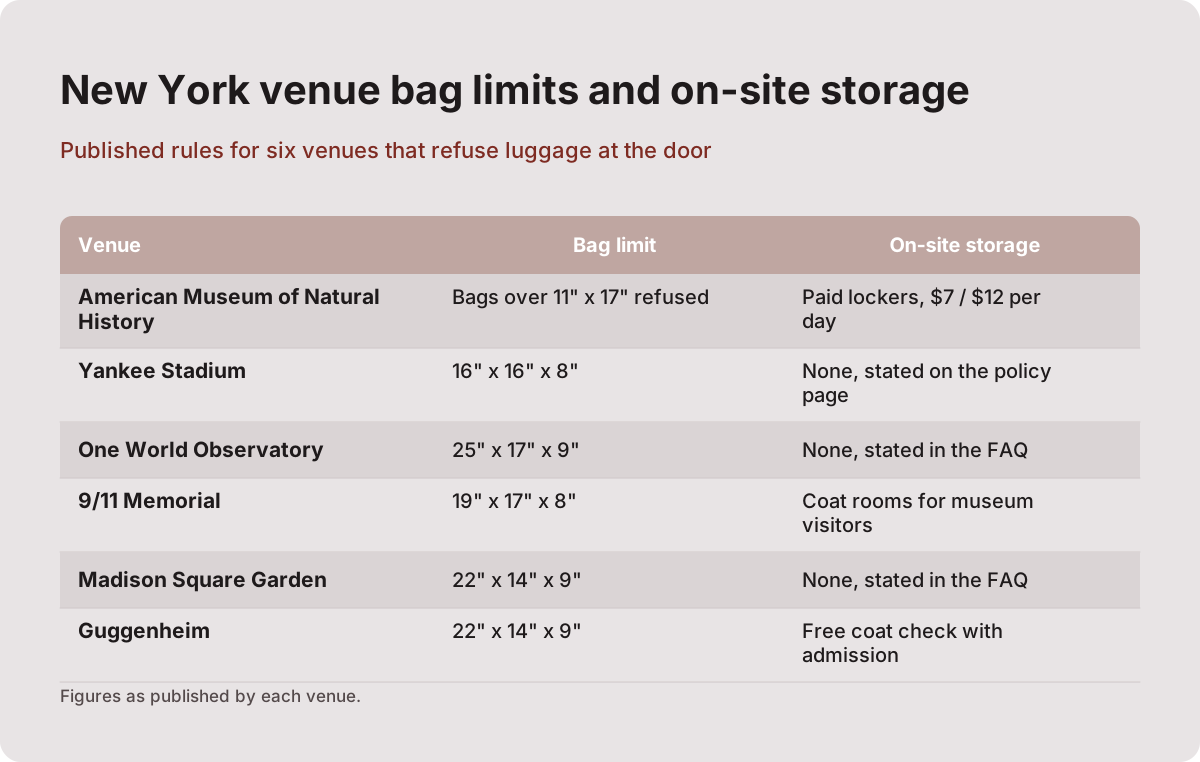
Museums, stadiums and observatories refuse luggage at the door, and several publish it in their own words: the American Museum of Natural History bans bags larger than 11 by 17 inches, Yankee Stadium allows one soft-sided bag no larger than 16 by 16 by 8 inches, and One World Observatory caps bags at 25 by 17 by 9 inches. A suitcase you cannot take inside is a suitcase you must store first.
Venue rules matter to this question because they invert it. The storage terms tell you what may not be in the bag; the venue rules tell you the bag itself may not come in, whatever is inside it. Nine of the eleven venues in this site's verified record refuse luggage outright, and six publish, in their own words, that they have no place to put it. The Empire State Building's FAQ lists "Large bags, suitcases, carry-on luggage, or oversized packages" as prohibited and adds: "There are no locker or storage facilities available on-site for personal belongings." Yankee Stadium's policy is blunter still: "There is no storage area for any items at Yankee Stadium." The wider set of guides lives on Luggage Storage Lockers in New York City.
The dimensions are worth knowing before you pack, because they are not interchangeable and they are not generous.
| Venue | Published bag limit | Luggage refused | On-site storage |
|---|---|---|---|
| American Museum of Natural History | Bags over 11" x 17" refused | Yes | Paid lockers, $7 / $12 per day, until 5 pm |
| Yankee Stadium | One soft-sided bag, 16" x 16" x 8" | Yes | None, stated on the policy page |
| One World Observatory | 25" high x 17" wide x 9" deep | Yes | None, stated in the FAQ |
| 9/11 Memorial | 19" x 17" x 8" onto the Memorial | Yes | Coat rooms for museum visitors |
| Madison Square Garden | 22" x 14" x 9" | Yes | None, stated in the FAQ |
| Guggenheim | 22" x 14" x 9" including handles and wheels | Yes, cannot even be checked | Free coat check with admission |
Two rows deserve a second look. The natural history museum is the one New York institution that genuinely runs public lockers, at $7 for a small unit and $12 for a large one, available until 5 pm, and its own visitor PDF still refuses luggage at the door: the lockers are for coats, shopping bags and day packs, and the large unit, at 22 by 11 by 19.5 inches, is roughly carry-on sized. The Guggenheim's rule shows how strictly dimensions are applied: 22 by 14 by 9 including handles and wheels, with items over the limit "not permitted in the museum and cannot be checked". The full venue-by-venue breakdown, including the Broadway theatre situation where the Nederlander houses publish a 20 by 14 by 9 limit and a luggage ban while other owners publish nothing, is in the guide to NYC museum bag and coat check rules.
The Statue of Liberty is the special case that ties venue rules back to prohibited items. The National Park Service states there are no locker storage areas at the screening facilities in either The Battery or Liberty State Park, and that "Suitcases, carry-on luggage, and other, large parcels will not be permitted on the ferry systems or at Liberty and Ellis Islands". The only genuine coin lockers this site has verified anywhere in New York sit at the entrance to the monument itself, rentable for 2 hours for a 25-cent deposit, and they hold only what you are already carrying, because the suitcase never made it onto the boat. If Liberty Island is on your itinerary, the storage booking has to happen before the ferry, not at it.
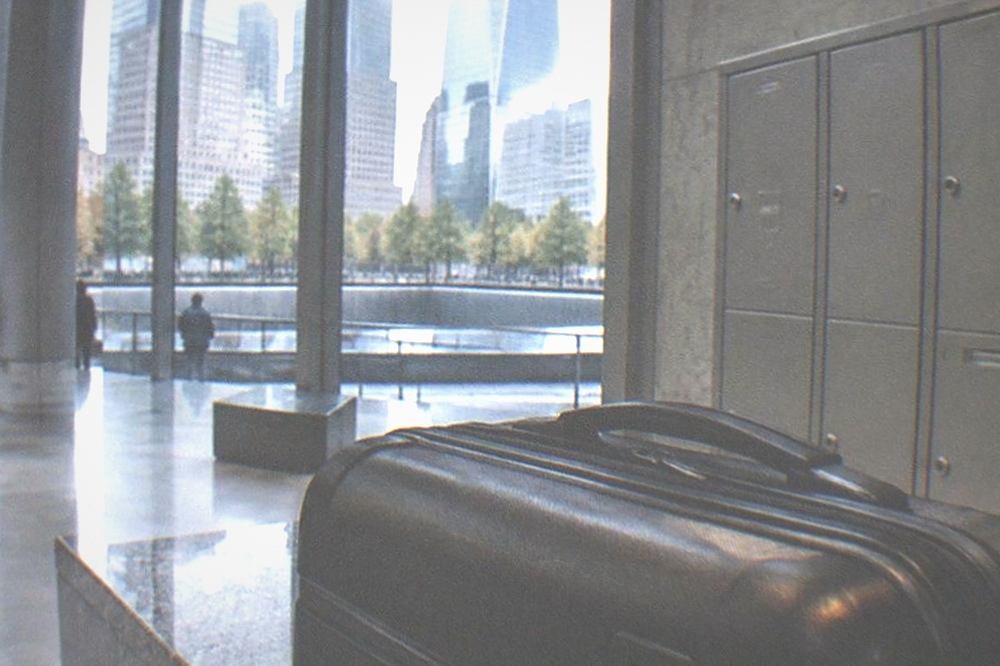
The practical reading of all this: the bag you store should be the bag the venue would not admit anyway, and the day bag you keep should be the one that fits the strictest dimension on your itinerary. A traveller storing near Times Square before a Broadway evening faces exactly this split, and the 44 storage points within 800 metres of that anchor exist largely for people doing it.
How Should You Pack The Bag You Are About To Hand Over?
Pack the stored bag as if it were checked hold luggage: clothes, shoes, toiletries under 100 millilitres where relevant, books and paper, and nothing with a battery, a chip, a prescription label you cannot replace or a resale value above the guarantee. Move the phone, laptop, tablet, camera, medication, passport, cash and keys to a small day bag that stays on your body, and photograph the packed bag before you close it.
The single best mental model is the airline hold. Nobody sane puts a laptop in a checked suitcase, and the reasons there are the reasons here: the bag leaves your sight, other hands move it, and the paperwork you signed says the operator is not responsible for exactly that class of item. The difference is that in storage, unlike the hold, you can keep the electronics with you, because you are coming back for the bag the same day. A small backpack or tote carried through the day is the entire solution.
| Item | Store it or keep it? | Why |
|---|---|---|
| Phone, laptop, tablet, e-reader | Keep | Named verbatim in the prohibited items clause |
| Passport, ID, boarding pass | Keep | You need them, and the JFK counter requires ID and a pass |
| Cash, cards, jewellery | Keep | High value, low bulk, no reason to store |
| Prescription medication | Keep | The 48-hour police report deadline is no help to a refill |
| Clothes, shoes, outerwear | Store | Exactly what storage is for |
| Toiletries, sealed | Store | No rule against them, but bag them against leaks |
| Alcohol, flammables, aerosols | Do not store at all | Named in the operator's published rules |
| Food, perishables | Do not store at all | Named in the operator's published rules |
Two packing habits earn their keep. First, lock the bag. The airport operator requires it, "All Bags Must Be Locked", and a lock costs a few dollars at any of the counters that sell them; for the city network a small TSA-style or combination lock is cheap insurance against a zipper opening in a stockroom. Second, photograph the packed bag open and closed. If a claim ever needs the police report the terms require within 48 hours, a photo of what was inside, taken before you zipped it, is the difference between a documented claim and a memory.
The last habit concerns the retrieval window, not the contents. Moynihan Train Hall publishes its own public hours as 5:00 AM to 1:00 AM daily, and states that overnight, from 1:00 AM to 5:00 AM, Amtrak and LIRR services move across the avenue to Penn Station east of 8th Avenue. A bag stored with the counter inside the hall cannot be collected while the hall itself is shut, so if your plans run past 1:00 AM, the 24-hour and late-night options in the guide to 24-hour and late-night luggage storage in NYC matter more than the packing list does.
What Happens If A Prohibited Item Goes Missing Anyway?
The claim fails. The terms state a prohibited item voids the entire claim, so the laptop takes the coat's protection with it. The guarantee is not insurance, the operator may withdraw it, claims must be filed within one week, and a police report is required within 48 hours. Your realistic recourse is travel insurance or a credit card benefit, and both will ask what was in the bag.
Walk the sequence as it actually unfolds. You store a suitcase on a morning, sightsee, come back at six, and the counter cannot find the bag. The first hours are the ones that matter: the terms give you 48 hours to file a police report and one week to make the claim, and the claim form will ask what was in the bag. If the honest answer includes a tablet, the claim is void, and not just for the tablet. The clause is not proportional; it is binary. That is why the packing advice in the previous section is not preference, it is the whole defence.
| Claim mechanic | What the terms say | What it means at the counter |
|---|---|---|
| Guarantee value | EUR 3,000 per bag, per claim | The cap, and only for bags stored within the rules |
| Prohibited item | Voids the entire claim | One tablet can take the whole payout down |
| Nature of the cover | Not insurance, may be withdrawn | Do not build a trip's risk plan on it |
| Police report | Required within 48 hours | File first, argue later, keep the report number |
| Claim deadline | One week from the incident | A late claim is a dead claim |
| Marketing figure | 10,000, in two currencies on one page | Appears nowhere in the binding terms |
The guarantee's own architecture explains why it is so strict. It is worth EUR 3,000 per bag under the terms, the same terms that say it is not insurance, that the operator may withdraw it, and that the marketing pages' 10,000 figure appears nowhere in the binding document. A storage network holding thousands of bags a day at $4.90 each cannot underwrite everyone's electronics, so it excludes them, publishes the exclusion, and enforces it at claim time. The exclusion is the business model. A reader who accepts that and packs accordingly loses nothing; a reader who fights it at claim time loses the claim.

There is one more layer worth knowing, and it is a genuinely obscure one: New York City licenses paid storage of consumers' goods. The Department of Consumer and Worker Protection states that a person or business must have a Storage Warehouse license to store consumers' household goods for a fee, a requirement that sits in NYC Code section 20-476, with self-storage and merchant warehousing carved out. This is background, not a claim about any storage counter; the city's own two pages describe the scope differently, "personal goods" on one and "household goods" on the other, and this site does not settle which applies to a shop counter holding a suitcase for a day. It is simply the regulatory landscape the industry sits inside, and almost no competing page mentions it.
For a day around Central Park, the same packing rules apply with one local wrinkle: the typical rate around the park is $4.90 per bag per day, but two points, at the 72nd Street subway station and at Cathedral Parkway / 110th Street, list $2.90, and nowhere else in the area. The cheaper rate does not change the prohibited items clause, so the tablet still travels with you.
Where Does This Leave The Bag You Actually Have?
Stored bags in New York should be boring: clothes, shoes, sealed toiletries and paper, locked, photographed and handed over with the valuables already on your body. The electronics clause, the operator bans on flammables, alcohol, firearms and perishables, and the venue dimension limits together form one consistent rule: store the shell of your trip, carry its brain. Pack that way and the guarantee you paid $1.99 in fees to stand behind is actually standing behind something.
The consistent thread through every source in this record is that New York's storage system is built for soft, low-value, replaceable contents. The terms exclude electronics. The airport operator excludes flammables, alcohol, firearms and perishables and demands locked bags. The museums exclude the suitcase itself. The MTA's rider guide, in the agency's own voice, tells travellers: "Don't travel with more than you can carry on your own, and avoid rush hour if you're transporting something big." Every one of those rules points the same direction: carry the small and precious, store the large and dull.
It also means the decision is almost always a two-bag decision. The traveller who tries to make one bag do both jobs, a suitcase that holds everything including the laptop, is the traveller the prohibited items clause was written for. Split the load, and the storage booking becomes what it is meant to be: a cheap, low-drama way to spend six unencumbered hours in a city that publishes, at nearly every attraction, a rule about exactly the bag you just got rid of.
Common Questions About What You Cannot Leave In A Stored Bag In New York
What can you not store in luggage storage?
The storage terms prohibit electronics outright, naming "Technological material (iPhone, iPad, Tablet, PC, smartphones)" verbatim, and the airport operator adds flammable materials, alcohol, firearms and perishables. Cash, jewellery, medication, passports and anything irreplaceable should stay on your person. A stored bag should contain clothes, shoes and soft items only.
Can I leave a laptop in a stored bag in New York?
No. Laptops fall under the prohibited items clause, and the terms state a prohibited item voids the entire claim, not just the claim for that item. Carry the laptop in a small day bag instead; every storage point in this site's roster is a staffed counter you return to the same day, so the device never needs to leave your side.
Does the guarantee cover electronics?
No. The guarantee is worth EUR 3,000 per bag under the terms, but the terms explicitly list technological material as prohibited, state the guarantee is not insurance, and state that a prohibited item voids the claim. Coverage for a laptop or phone would have to come from travel insurance or a card benefit, and both will ask what was packed.
Can I store food or alcohol in a stored bag?
No. The airport storage operator's published rules state "No Flammable Materials or Alcohol / Firearms, Perishables are Prohibited". The city's shop counters apply practical judgement on top: a leaking or fragrant bag can be refused at handover. Perishables in a bag held in a stockroom all day are a health problem as well as a rules problem.
Do I need to lock a bag I am storing?
At the JFK counters, yes: the operator states "All Bags Must Be Locked", and locks are sold at the Terminal 1 and Terminal 4 storage stores. In the city network a lock is not stated as a requirement, but it is cheap protection against a zipper opening off your watch, and it strengthens any later claim.
What happens if a prohibited item goes missing from my stored bag?
The claim fails. The terms void the entire claim when a prohibited item was stored, the guarantee is not insurance and may be withdrawn, and claims carry a one-week deadline with a police report required within 48 hours. Photograph the packed bag before closing it, and keep valuables out of it in the first place.