How A New York Bag Drop-Off Works, Step By Step
The hardest part of storing a bag in New York is not the price or the location. It is picturing the moment you let go of the handle. Here is exactly what happens, from the booking screen to the walk back to the counter.

Short answer
You book a storage area online, usually around $4.90 per bag per day plus a $1.99 checkout fee, walk to a staffed shop or cafe counter, hand over the bag, receive a receipt, and collect it later the same day with the same receipt. Every one of the 88 points this site lists is a staffed counter, not a locker.
The moment that stops most first-timers is not the price. It is the walk to the door. You have packed a suitcase for a week in another country, and the plan asks you to hand it to a person behind a counter in a shop you have never entered, in a city you may never have visited, and then walk away. That hesitation is reasonable, and it dissolves almost entirely once you can picture the four minutes that follow. A New York bag drop-off is a short, ordinary transaction that happens thousands of times a day across the city, and every step of it is knowable in advance.
This guide walks through the whole sequence: what you do on the booking screen, what happens at the counter, what the paperwork means, what the price genuinely adds up to, and what to check when you come back for the bag. Along the way it also covers the honest fine print that most pages skip, including what the operator's own terms say about electronics, what the guarantee actually covers, and why nothing in this system is a locker.
What Actually Happens When You Drop A Bag At A New York Storage Point?
You arrive at an ordinary business, a shop, a cafe, a convenience store or a hotel front desk, and a staff member takes your bag, records it, hands you a receipt, and stores it behind the counter or in a back room. There is no code, no key and no metal door. All 88 storage points this site lists across its 8 New York areas are staffed counters, and zero of them are self-service lockers of any kind.
That single fact reframes everything. You are not renting a box. You are asking an employee of a real business to take custody of your property for a few hours, in exchange for a fee, under a booking that already exists in their system. The business is a bakery at 8am and a bag counter at 8:05am. The person serving you may well be the same person who sells someone else a coffee two minutes later.
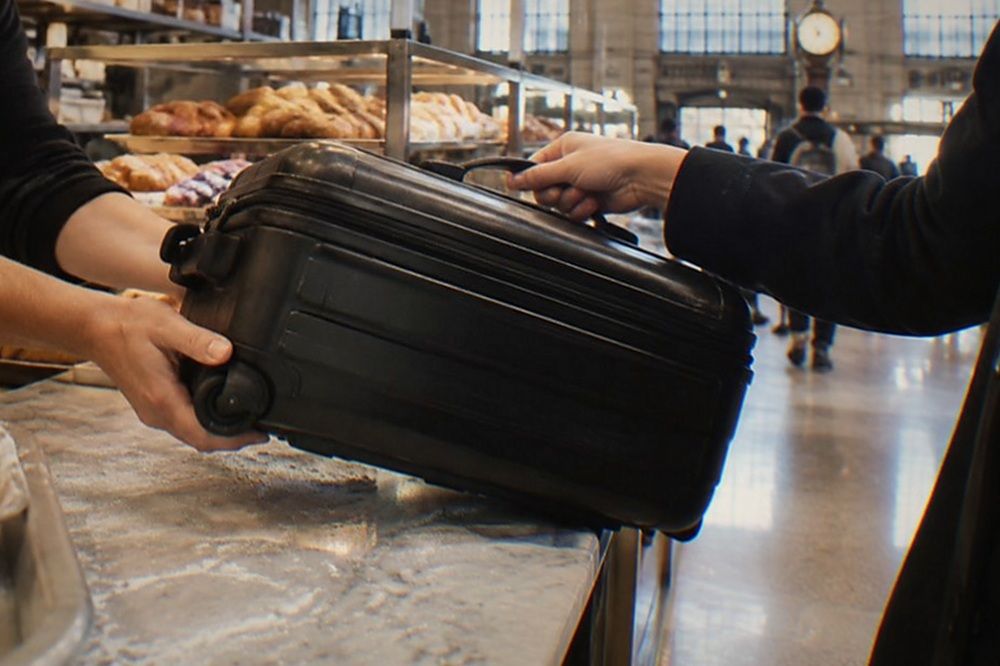
What makes this workable rather than risky is that the transaction is not improvised. The booking you made online is the backbone: the counter has your name, your time window and your payment already on file before you walk in. Your job at the counter is three small things: show the booking, hand over the bag, take the receipt. The rest, the tagging, the storing, the record-keeping, is the staff side of an exchange they perform many times a day.
It helps to know what the counter is used to. The busiest area on this site's roster, Times Square, carries 44 storage points within 800 metres of its anchor, rated 4.79 across 2,400 reviews, and 42 of those points publish their hours. A shop in that zone is not nervously taking its first suitcase of the month. The pattern is routine for them, which is precisely why it can become routine for you.
How The Booking Works Before You Ever Leave Home
You select an area, not a street address, pay online, and receive a confirmation that names the exact point afterwards. The typical New York rate is $4.90 per bag per day plus a $1.99 per-bag checkout fee, so one bag for one day comes to $6.89 all in, and the full price is shown before you pay anything.
The area-not-address point catches more people than anything else, and it is worth setting expectations honestly. A recent review on the operator's Trustpilot page complains that the company "refuses to share even an approximate storage address until AFTER you've paid". That is a real traveller report, and it describes how the system is built: you choose Penn Station, Times Square or the World Trade Center, you see how many points sit within 800 metres of that anchor, and the specific shop is assigned with your confirmation. If knowing the exact door in advance is essential to your plans, that is the trade-off to weigh before booking.
What you do get in advance is substantial. Each area page shows the number of points, the aggregate rating, how many publish hours, and the rate. The price itself deserves one honest sentence: the operator's own New York page now says that its advertised $2.90 is "the lowest currently available city price, not a promise that every location or bag category has the same rate", and this site's own count found $4.90 on 168 of 178 real New York point cards. Expect $4.90. Treat $2.90 as marketing, exactly as the operator's disclaimer does.
Payment happens once, online, before the drop-off. Nothing is owed at the counter for the storage itself, which is why the exchange at the shop is so short. The $1.99 fee is per bag, charged once at checkout rather than per night, so a three-day hold on one bag is $16.69 all in, and the arithmetic is worth doing before you book rather than after.
If your plans touch the big transport hubs, the trio below covers the three areas first-timers weigh most often: the Penn Station zone, the Port Authority zone and the World Trade Center zone, each with its own point count and review pool.
One more booking-screen habit pays for itself: check the hours. In the Penn Station area, 25 of the 27 points publish hours; in the World Trade Center area, all 4 do. The booking window you choose should sit comfortably inside the counter's published day, with slack on both ends for a delayed train or a museum that runs long.
The Seal, The Receipt And The Pickup: What Each One Means
The staff member tags your bag, often with a numbered seal or label matched to your booking, and hands you a receipt. That receipt is your claim ticket: the same person or a colleague matches it to the bag when you return, checks it against the record, and hands the suitcase back. Lose it and the pickup gets slower, not impossible.
The seal is the part first-timers ask about most, and it is simpler than it sounds. It is not a customs seal or a tamper-evident security envelope. It is a tag, a sticker or a numbered plastic loop that connects your physical bag to your booking record, so that the person at 4pm knows the suitcase in the back room is yours and not the identical black roller that arrived an hour later. Some points photograph the bag at drop-off for the same reason.
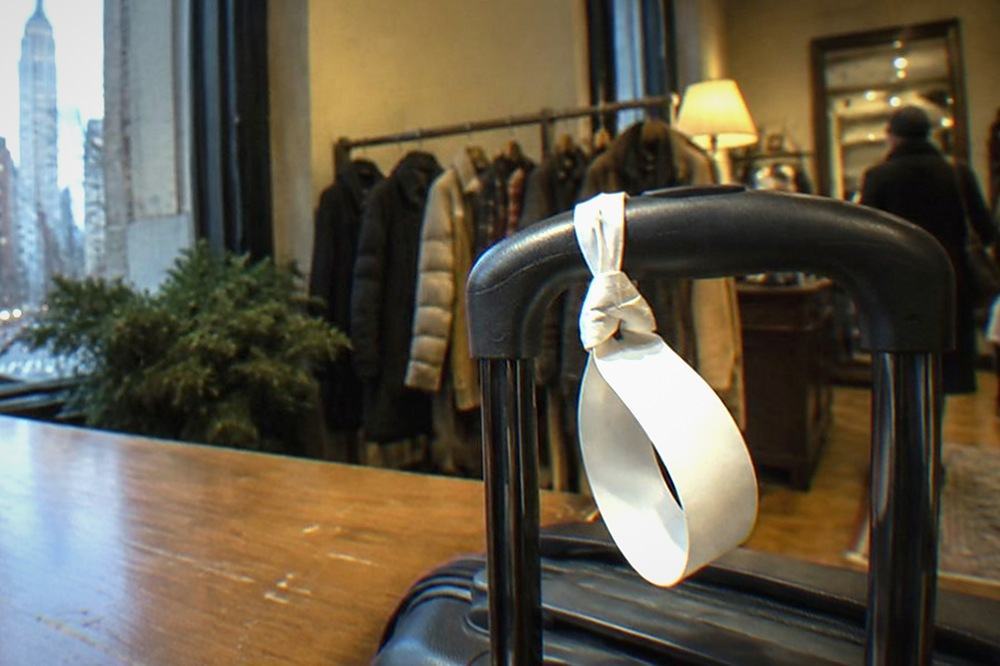
The receipt works the same way a coat check does. Treat it like a claim check at a museum or a dry-cleaner ticket: keep it on your person, not in the bag you are handing over, and photograph it with your phone as a backup. At pickup, the counter reverses the drop-off in about a minute: match, retrieve, hand back, done. There is no deposit to recover and no key to return, because there was never a locker.
Before you commit to a specific area, it can help to look at the counters with the deepest review pools, because a few thousand completed drop-offs tell you more about how smooth the handover is than any description can. The Penn Station zone alone holds 27 points rated 4.84 across 3,583 reviews.
Two small habits make the whole exchange painless. Arrive with the booking confirmation visible on your phone rather than buried in an inbox search, and say up front how many bags you are dropping, since the fee and the record are both per bag. If your plans change mid-day, the booking window on your confirmation is the thing to check first.
What The Drop-Off Really Costs: The New York Price Math
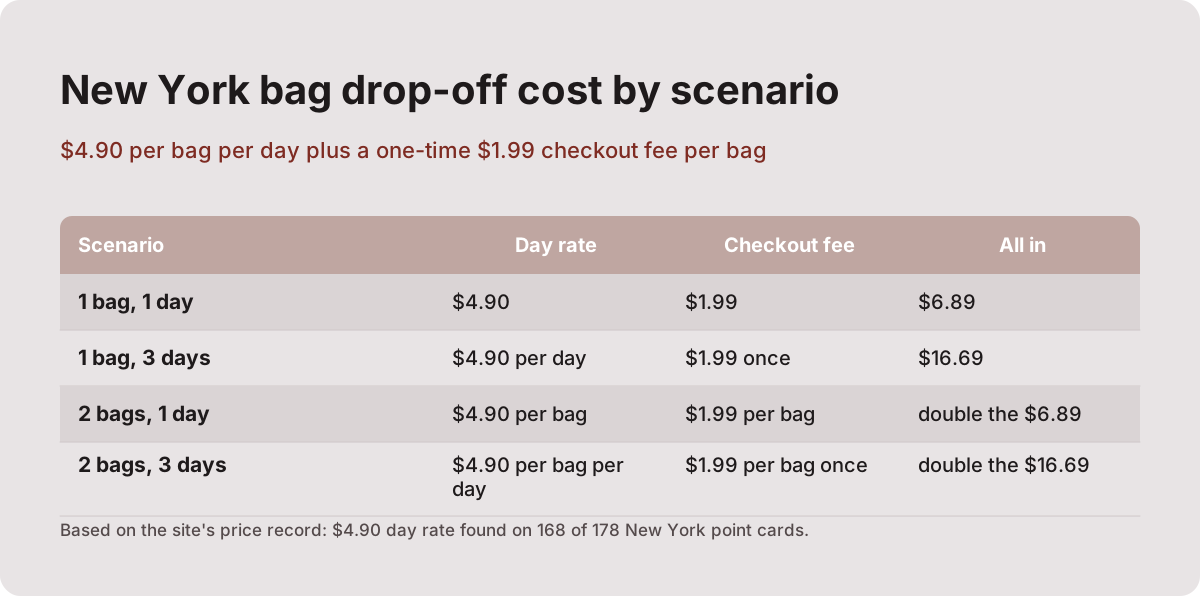
Budget $4.90 per bag per day plus a one-time $1.99 checkout fee per bag. One bag, one day is $6.89 all in; one bag, three days is $16.69. The fee is charged once per bag, not per night, so multi-day holds scale at $4.90 per bag per day, and the per-bag structure means two bags simply doubles each figure.
The table below is the arithmetic this site's own price record supports, using the two figures the operator publishes: the $4.90 day rate found on 168 of 178 New York point cards, and the $1.99 per-bag checkout fee. Nothing else is added at the counter.
| Scenario | Day rate per bag | Checkout fee per bag | All in |
|---|---|---|---|
| 1 bag, 1 day | $4.90 | $1.99 | $6.89 |
| 1 bag, 3 days | $4.90 per day | $1.99 once | $16.69 |
| 2 bags, 1 day | $4.90 per bag | $1.99 per bag | double the one-bag figures |
| 2 bags, 3 days | $4.90 per bag per day | $1.99 per bag once | double the one-bag, three-day figures |
Two exceptions and one contrast belong beside that table. The exception: in the Central Park area, a cheaper $2.90 day rate exists at exactly two points, the 72 St Subway Station and Cathedral Pkwy / 110 St, and nowhere else in the city's roster on this site. The contrast: Amtrak's staffed bag storage at Penn Station, the one true left-luggage counter inside a Manhattan transport hub, charges $20 per item per 24 hours for Amtrak customers and $30 per item per 24 hours for the general public with photo ID, per Amtrak's own baggage services page. A staffed shop counter at $6.89 is a different product at a different price, and knowing both numbers makes you a better shopper.

Where you drop matters as much as when. The Times Square zone, with 44 points within 800 metres rated 4.79 across 2,400 reviews, is the densest on the roster, which means short walks and many published-hours options. If your day is built around the theatre district, that density is worth a look before you book anything.
What You Can And Cannot Leave In A Stored Bag
The operator's terms prohibit a specific list, and the most consequential entry is electronics: "Technological material (iPhone, iPad, Tablet, PC, smartphones)" may not be stored at all. A prohibited item found in a stored bag voids the entire guarantee claim, not just the claim for that item, so the phone and the laptop travel with you, always.
That electronics rule is the single most important line in the terms for a New York traveller, because almost everyone's suitcase contains a laptop or a tablet. The terms are blunt about the consequence: a prohibited item voids the whole claim. The honest reading is that a bag drop-off is for clothes, shoes, books and the dead weight you do not want to carry, while your phone, your laptop and your medication stay on your body. More of these guides are collected on Luggage Storage Lockers in New York City.
| Item | Can it be stored? | Why |
|---|---|---|
| Clothes, shoes, toiletries | Yes | The core use case for a day hold |
| Laptop, tablet, phone | No | Named in the terms' prohibited-items clause; voids any claim |
| Passport, travel documents | Take them with you | Needed for ID and travel, not covered by the guarantee |
| Medication | Take it with you | No temperature control or access until pickup |
| Flammable materials, alcohol | No | Prohibited by the operator's terms |
| Ski bags, oversized items | Check the point's listing | Some counters refuse oversized items; the listing says which |
The guarantee itself deserves accurate wording rather than the marketing number. The binding terms cover each bag for a value of EUR 3,000, with the same figure as the per-claim cap, and the terms are explicit that it is not insurance. Claims carry deadlines: roughly a week to file, and a police report within 48 hours for theft claims. The marketing pages show a much larger figure, sometimes in euros and sometimes in dollars on the same page, but the terms are what a booking is actually governed by. For the full clause-by-clause breakdown, see what the Radical Storage guarantee actually covers, and for the prohibited-items list in detail, read what you cannot leave in a stored bag in New York.
Why It Is A Staffed Counter And Not A Locker
New York City has almost no public luggage lockers in its transport hubs, and every storage point in this site's roster is a staffed counter inside an existing business. Grand Central's own FAQ states flatly that there are no luggage storage services there; the Port Authority says the same about its bus terminal. The shop-counter model exists precisely because the locker model does not.
This is the honest backdrop to the whole drop-off, and it is the part most competing pages get wrong in both directions. Some pages promise lockers that do not exist. Others imply the whole city is closed to stored bags, which is also false. The verified position, hub by hub: Grand Central Terminal's own site answers the storage question with a plain "No, there are no luggage storage services at Grand Central", and the Port Authority of New York and New Jersey states it "does not provide baggage storage facilities at the bus terminal". Penn Station is the one hub with a true left-luggage counter, Amtrak's, and even that is a staffed desk rather than a bank of lockers.
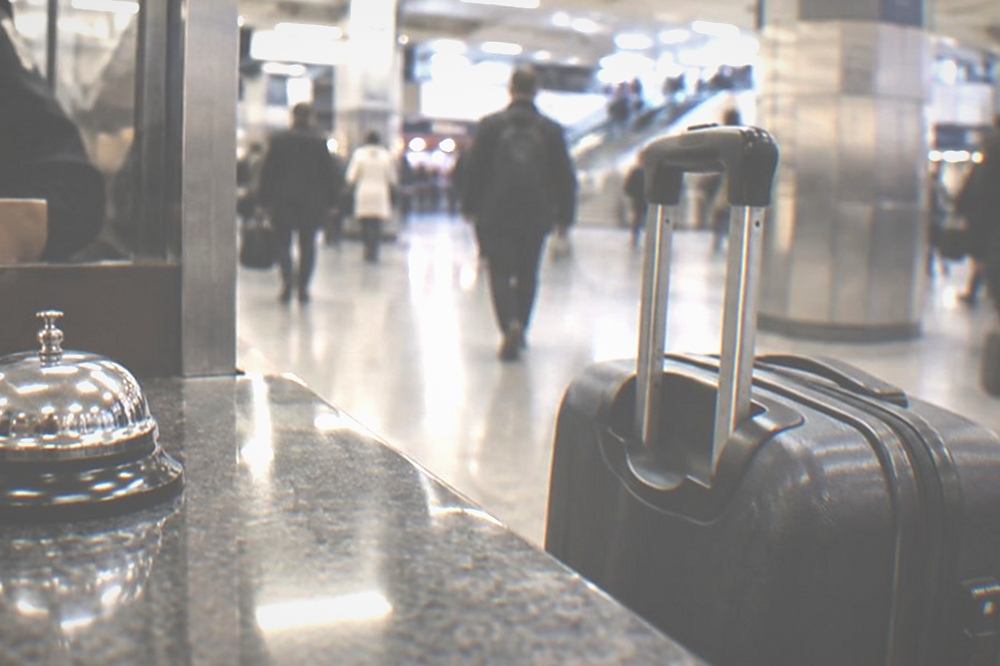
The staffed-counter model has consequences you can feel at the counter. Hours are business hours, not machine hours, which is why the number of points publishing hours matters on every area page. Access is mediated by a person, which means the receipt matters and the booking matters. And the custody is human, which cuts both ways: a person checks your bag in and checks it out, but there is no steel door between your suitcase and the room it sits in. For a fuller treatment of the locker question across the whole city, see which New York places have luggage lockers and which have none.
The MTA's own rider guidance, aimed at people hauling big items, puts the case for storing rather than dragging: "Don't travel with more than you can carry on your own, and avoid rush hour if you're transporting something big", per the official subway riding guide. The agency is telling you, in its own voice, that a suitcase on the 6 train at 5pm is a problem you chose.
Around Grand Central, where the terminal itself stores nothing, the surrounding blocks do the work: 14 points within 800 metres, rated 4.7 across 502 reviews, every one of them a staffed counter in a business rather than anything inside the terminal itself.
Getting Your Bag Back: Hours, Timing And What To Check
Collect inside the counter's published hours and inside your booking window, bring the receipt, and do a fast inventory before you walk away: zip the case, check the wheels, confirm nothing you need was left in an outer pocket. The pickup is the mirror of the drop-off and usually takes under two minutes.
Timing is where pickups go wrong, and the failure mode is almost always the same: a return planned against your schedule rather than the counter's. The Penn Station zone has 25 of its 27 points publishing hours, so the check takes seconds on the area page. The one genuinely time-clocked case in the record is Amtrak's counter at Moynihan Train Hall: the hall itself publishes hours of 5:00AM to 1:00AM daily, and overnight, from 1:00AM to 5:00AM, Amtrak and LIRR services move across the avenue, per Moynihan Train Hall's own visitor page. A bag stored with Amtrak cannot be retrieved from the Train Hall during that gap because the hall is shut, not because the counter is.
| Check | At drop-off | At pickup |
|---|---|---|
| Booking confirmation | Show it on your phone | Same booking, same name |
| Receipt / tag | Take it, photograph it | Hand it back or show the photo |
| Bag condition | Note existing scuffs | Zip, wheels, handles, outer pockets |
| Contents | Electronics and meds out | Nothing needed was left inside |
| Window | Drop-off inside published hours | Return with slack before closing |
The inventory habit takes ten seconds and settles ninety percent of disputes before they exist. Zip the case closed, glance at the wheels and the handle, and pat the outer pockets. If something is wrong, the moment to say so is at the counter with the staff member standing there, not from the airport two hours later.

For the deepest-reviewed zone in the roster, the Penn Station area's 27 points rated 4.84 across 3,583 reviews give you the widest choice of counters and the longest record of completed handovers, which is exactly what a nervous first-timer wants behind them.
If your hold needs to stretch past a single day, the same counter and the same receipt keep working: the day rate repeats per 24 hours and the checkout fee does not. The planning details for longer holds, including what changes and what does not, are covered in overnight and multi-day bag storage in NYC.
The Short Version: Your Drop-Off In Six Steps
Book the area, check the hours, take your electronics out, walk to the counter with the confirmation on your phone, hand over the bag and pocket the receipt, then return inside the window and do a ten-second inventory before you leave. That is the entire transaction, and every one of those six steps is visible before you pay anything.
A first drop-off feels like a leap of faith only because the details are invisible. Once you can name the seal, the receipt, the fee and the pickup window, the transaction becomes what it is for the thousands of people who complete it daily: a two-minute errand at a counter, with a paper tag standing between you and a very ordinary afternoon without a suitcase.
The three areas below cover the situations first-timers book most: a station arrival, a bus terminal connection and a Lower Manhattan sightseeing day.
Common Questions About How A New York Bag Drop-Off Works
Do I need to print anything for the drop-off?
No. The confirmation on your phone is enough at the counter. A printed copy works too, but the staff member is matching your booking in their system, not collecting paper. Photographing the receipt they give you is the one piece of paperwork genuinely worth doing.
Is my bag locked up while it is stored?
Not behind a locker door. Every storage point in this site's New York roster is a staffed counter inside a business, and the bag is stored behind that counter or in a back room. The tag and the booking record are what track it, not a lock you hold a key to.
What happens if I lose the receipt?
The pickup usually gets slower rather than impossible, because your booking and your name are already in the counter's system. Photographing the receipt at drop-off removes nearly all of the friction, since the photo satisfies the same matching purpose.
Can I leave my laptop in the stored bag?
No. The operator's terms name electronics, including phones, tablets and laptops, as prohibited for storage, and a prohibited item voids the entire guarantee claim. Carry the electronics and store the dead weight.
Do I pay at the counter?
No, payment is completed online when you book, and the full price including the $1.99 per-bag checkout fee is displayed before you pay. The exchange at the counter is a handover, not a transaction.
What if I come back after the counter closes?
You wait until it reopens. Hours are business hours, which is why each area page shows how many points publish them. Build slack into both ends of your booking window, and if a late-night retrieval is essential, choose a point whose published hours cover it before you book.