Public Lockers In NYC: Which Places Have Them And Which Have None
New York has almost no public luggage lockers. This guide lists the few genuine ones, quotes the hubs and venues that have none, and shows what works instead.
Short answer
New York City has almost no public luggage lockers. The genuine ones are the coin lockers at the Statue of Liberty monument, the day lockers at the American Museum of Natural History, and a seasonal tennis permit locker in Central Park. Every transport hub has none, and the working alternative is a staffed bag-drop counter, typically $4.90 per bag per day plus a $1.99 checkout fee.
Grand Central Terminal answers the question on its own website, in one flat sentence: "No, there are no luggage storage services at Grand Central." The Port Authority says the same about its bus terminal, twice. Yankee Stadium writes "There is no storage area for any items at Yankee Stadium." A reader searching for public lockers in NYC is therefore searching for something that barely exists, and the honest page says so up front, then shows what actually works. This guide is that page: a place-by-place inventory of the lockers that are real, the hubs and venues that publish a flat no, and the staffed alternatives that fill the gap.
Where Can You Actually Find Public Lockers In NYC?
New York City has exactly three genuinely public locker offerings, and none of them is a luggage option. The Statue of Liberty monument rents coin lockers for a 25-cent deposit, for 2 hours, on Liberty Island itself. The American Museum of Natural History rents day lockers at $7 small and $12 large, for coats and day bags only. Central Park's Tennis Center sells a $20 seasonal locker permit to tennis players. That is the complete list.
Everything else on this page is either a staffed counter or a published refusal. The distinction matters more in New York than in almost any other city, because the absence is total at the places where a traveller needs it most: the stations, the bus terminal, and nearly every major venue. There is no locker bank at Penn Station, none at Grand Central, none at the Port Authority Bus Terminal, and none at any of the three airports.
The pattern is so consistent that it is worth stating as a rule for reading the rest of this guide: when a New York institution publishes anything about bags, it is almost always a refusal or a size limit, and when it publishes nothing, the honest answer is "unpublished", not "probably fine". The National Park Service, for the Statue of Liberty, states it plainly on its own safety page: "There are NO locker storage areas at the screening facilities in either The Battery or Liberty State Park." The lockers that do exist sit past security, at the monument entrance, and hold only what you were already carrying, because suitcases cannot board the ferry at all.
Which Transport Hubs Have Lockers?
No New York transport hub rents a locker. Grand Central, the Port Authority Bus Terminal, the George Washington Bridge Bus Station and Journal Square all publish a flat no on their own pages. Penn Station is the one exception in service terms: Amtrak runs a staffed temporary bag-storage counter there, at $20 per item per 24 hours for Amtrak customers and $30 for the general public with photo ID, but it is a counter, not a locker bank.
Grand Central's refusal is the clearest in the city. Its own FAQ reads: "Does Grand Central offer luggage storage? No, there are no luggage storage services at Grand Central. Please plan ahead if you are arriving with luggage." The terminal's published services directory backs it up, listing an Apple Store, opticians, a barber and a tennis club, with no storage, no lockers and no cloakroom anywhere in it.
The Port Authority is just as direct, in two separate places. Its terminal page states: "The Port Authority of New York and New Jersey does not provide baggage storage facilities at the bus terminal." Its FAQ repeats the sentence and adds that your bus carrier may have limited storage capacity, so the question of a Greyhound or Peter Pan bag hold is one to put to the carrier, not the terminal. The terminal's binding rules also prohibit abandoning any property on the premises, which closes the informal workaround of leaving a bag by a pillar.
Penn Station is where the story changes, and it is the single most contradicted fact in this whole niche. Most travel content says New York's stations have nothing. Amtrak's own baggage page says otherwise: "Temporary bag storage is available to both Amtrak customers (valid ticket required) and the general public (valid photo ID required)", priced at $20 per item per 24 hours for customers and $30 for the general public. Moynihan Train Hall's page adds that the service is provided "for all passengers, regardless of the railroad operator that you're traveling with", at the Amtrak Customer Service desk. The two official pages do not say exactly the same thing about who qualifies, so quote both, and note that the counter's precise location and its own hours are unpublished. Moynihan Train Hall itself is open 5:00 AM to 1:00 AM daily, which sets the outer window for any drop-off or pickup there.
If your route runs through the west side, the practical read is this: Penn has one staffed counter inside the station, Grand Central has nothing inside, and the Port Authority has nothing inside, but all three sit inside neighborhoods where staffed bag-drop points operate within an 800-metre walk. That is the shape of the whole market, and it is the shape this site, Luggage Storage Lockers in New York City, exists to document.
What About The Airports?
JFK is the only New York airport with bag storage, and it is a staffed Smarte Carte counter, not a locker bank: Terminal 1 open 7:00 AM to 10:00 PM, Terminal 4 open 24 hours, with photo ID and a boarding pass required. LaGuardia and Newark list no baggage storage at all in their own services. No New York airport publishes a storage price, so call the operator for the current rate.
JFK's own services page lists baggage storage alongside carts and wrapping, and its Terminal 4 page adds that bags can be stored "for a few hours or up to 72 hours", with all customers requiring a confirmed ticket and items subject to TSA inspection. The operator, Smarte Carte, publishes the hours and the rules but no rate, and the booking flow behind the Terminal 4 appointment link serves no dollar figure to a non-JavaScript fetch. Two dedicated verification attempts failed to find a published price, so this guide will not guess one. The operator's own line, "All Bags Must Be Locked", is also worth reading twice: you bring the lock. The operator publishes a phone number for the service, 718-916-8963, and calling it is the honest way to get a price the operator will not print.
There is a genuine contradiction at Terminal 1 that an honest page should carry in full. The operator publishes a Terminal 1 counter with its own hours. The airport's own Terminal 1 page does not mention baggage storage anywhere in its text. Both are real, both are official, and they disagree by omission.
LaGuardia and Newark are simpler, in an absence kind of way. LaGuardia's services page lists carts, a baggage office and oversized baggage, with no storage entry where JFK's identically structured list has one. Its own FAQ, asked where to store bags, answers with luggage carts and porter services. Newark's list is the same shape, carts and offices and oversized baggage, with no storage entry. Neither airport publishes a denial, so the honest wording is "lists none", never "says there is none". Smarte Carte's own US airport list names Honolulu, JFK, Seattle-Tacoma and Baltimore/Washington, and not LaGuardia or Newark.
One timing note for anyone weighing an airport run against a city bag drop: the AirTrain fare between JFK and Jamaica or Howard Beach is $8.75 each way, published by the airport itself, and the airport carries a standing advisory that "getting to and from JFK may take longer than usual due to construction at the airport. Please allow for significantly more time." The airport also states the AirTrain is built for "travelers with mobility devices, strollers, or luggage", so the train is not the problem; the clock is.
Do Any New York Venues Rent Lockers?
Yes, two New York venues rent genuine lockers to the public, with sharp limits. The Statue of Liberty monument rents coin lockers for 2 hours with a 25-cent deposit, and they only hold what you carried past security, since luggage cannot board the ferry. The American Museum of Natural History rents day lockers at $7 small and $12 large, refuses luggage at the door, and closes the lockers at 5 pm.
The Statue of Liberty lockers are the only coin lockers this site has verified anywhere in New York City, and they are almost useless for luggage, which is precisely why they are honest evidence. The National Park Service page is explicit: suitcases and carry-on luggage "will not be permitted on the ferry systems or at Liberty and Ellis Islands", and items surrendered at security "will not be returned". The lockers exist for Crown and Pedestal ticket holders who must empty their pockets and small bags before the secondary screening. A quarter, two hours, and only what fits.
The natural history museum's lockers are closer to useful, but the museum's own visitor PDF draws the line in bold: not permitted are "Large bags or back packs or luggage". The large locker measures 22 x 11 x 19.5 inches, roughly carry-on sized, and the museum still refuses the suitcase that would fill it. The lockers are for coats, shopping bags and day packs, and they shut at 5 pm regardless of museum hours.
The tennis centre is the newest find, and it is a good one, because it is the City itself renting lockers. NYC Parks sells Central Park Tennis Center locker permits for the tennis season, from the first Sunday of April to the Sunday before Thanksgiving, at $20.00 each, first come first served, valid for the whole season, non-refundable and non-transferable. It is a seasonal permit for players, not a luggage option, and it must never be presented as one. Its value is as proof of the site's central point: New York does have lockers, and they are at a tennis centre, a museum coat area and a national monument, none of them near a station.
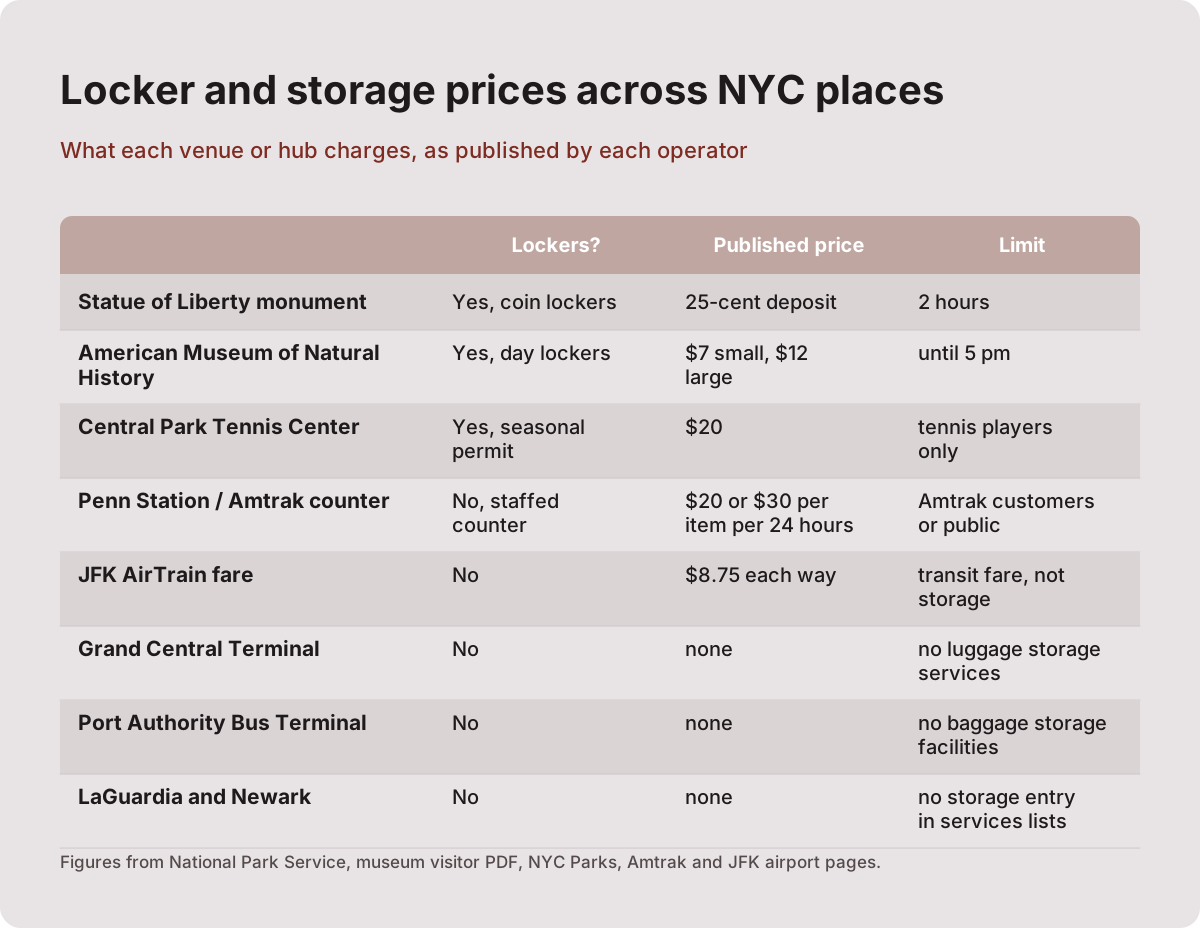
| Place | Lockers? | What it publishes instead | Source |
|---|---|---|---|
| Statue of Liberty monument | Yes, coin lockers, 25-cent deposit, 2 hours | Luggage banned on ferries and islands | National Park Service |
| American Museum of Natural History | Yes, $7 small, $12 large, until 5 pm | Luggage and bags over 11" x 17" refused | Museum visitor PDF |
| Central Park Tennis Center | Yes, $20 seasonal permit | Tennis players only, first come first served | NYC Parks |
| Penn Station / Moynihan | No | Amtrak staffed bag storage, $20 or $30 per item per 24 hours | Amtrak, Moynihan Train Hall |
| JFK | No | Smarte Carte staffed counters, T1 and T4 | Airport and operator pages |
| Grand Central Terminal | No | "No luggage storage services" | Terminal FAQ |
| Port Authority Bus Terminal | No | "Does not provide baggage storage facilities" | Port Authority, twice |
| LaGuardia and Newark | No | No storage entry in services lists | Airport services pages |
Can You Use The City's Sidewalk Lockers?
No. New York City runs a public self-service locker network on its own sidewalks, called LockerNYC, and it is explicitly for parcels. The operator's own page describes the lockers as "secure self-service access points designed to facilitate the collection of packages from online orders", available 24/7. A suitcase is not a package from an online order, and nothing on the operator's page invites one.
This is worth a section because the lockers are genuinely visible on the street, and a traveller who has read that "New York has public lockers" will eventually find one and wonder. The answer is in the operator's own words: the service exists for package pick-ups and returns, and the city invites the public to sign up "to try LockerNYC free of charge for package pick-ups and returns". That is the whole offer. The residential smart-locker operators are narrower still: one major operator's terms describe registering to receive packages at a specific locker location, with your landlord possibly charging fees and setting retention limits.
The pattern generalizes. Every self-service locker that actually exists in New York is aimed at parcels, tennis gear, coats, or the contents of your pockets before a monument screening. None of them is aimed at a suitcase, and none of the operators pretends otherwise. When a page tells you New York has lockers without naming which ones, it is usually blending these parcel networks into a luggage claim they do not support.
Why Do The Storage Networks Have No Lockers Either?
Because every point in the networks that actually serves New York is a staffed counter in a shop, cafe or hotel, not a machine. This site's own measured record counts 178 distinct Radical Storage points across the network's New York area pages, and zero of them is a locker: 116 are shops, 15 are cafes, 10 convenience stores, 10 delivery services, 7 restaurants, 6 hotels, and the rest are offices, rentals, laundries and one tobacco shop.
That distribution is the honest backbone of this whole topic. The company does operate lockers somewhere: a partnership announcement describes activating parcel lockers across the United Kingdom for its network. But that is a UK parcel-locker integration, and it must never leak into a New York sentence. In New York, every single point is a staffed partner counter where a person takes your bag and hands you a receipt.
| Place type | Points | Share of the network |
|---|---|---|
| Shop | 116 | 65% |
| Cafe | 15 | 8% |
| Convenience store | 10 | 6% |
| Delivery service | 10 | 6% |
| Restaurant | 7 | 4% |
| Hotel | 6 | 3% |
| Office, rental, laundry, tobacco, storage | 14 | 8% |
| Locker | 0 | 0% |
The price structure is equally un-locker-like. The advertised floor is $2.90 per bag per day, but the operator itself now disclaims that figure in its own words: "This is the lowest currently available city price, not a promise that every location or bag category has the same rate." The measured reality is that 168 of 178 New York point cards show $4.90, and a $1.99 fee per bag is added at checkout. One bag for one day comes to $6.89 all in. A locker would not have a checkout fee; a staffed network does.
The guarantee is where the difference matters most, and the terms are blunt about it. The terms and conditions read: "Each Bag is covered with a Radical Storage Guarantee for a value of EUR 3000", with claims capped at that amount per claim. The marketing pages advertise a larger figure, printed as euros in one place and dollars in another on the same page, but that number appears nowhere in the terms, so this site reports the terms. The terms also list electronics among prohibited items, including phones, tablets and laptops, which voids a claim entirely if you ignore it. A coin locker has no prohibited-items clause; a staffed network does, and you should read it before you drop a laptop bag.
One more expectation worth setting, from traveller reporting rather than from any operator's marketing: a recent review on the operator's Trustpilot page complains that the company "refuses to share even an approximate storage address until AFTER you've paid". A reader booking a storage point is booking an area and a walking radius, not a street address, and knowing that in advance changes how you plan the walk.
What Works Instead Of A Locker In New York?
A staffed bag-drop counter, booked in advance, is the working alternative, and it is the only alternative at scale. Across the eight areas this site publishes, 88 distinct storage points operate within 800 metres of their area anchors, at a typical $4.90 per bag per day plus the $1.99 checkout fee. Every one is a staffed counter with published hours, and several areas carry ratings in the thousands of reviews.
The counts are measured, not marketed. Penn Station's area carries 27 storage points within 800 metres, rated 4.84 across 3,583 reviews. Times Square carries 44 points, rated 4.79 across 2,400 reviews. The Port Authority area carries 36 points, rated 4.79 across 2,126 reviews. Grand Central, the terminal that stores nothing itself, has 14 staffed points around it, rated 4.7 across 502 reviews. Even the thinner areas work: the World Trade Center has 4 points rated 4.72 across 201 reviews, and Brooklyn has 11 points rated 4.82 across 79 reviews.
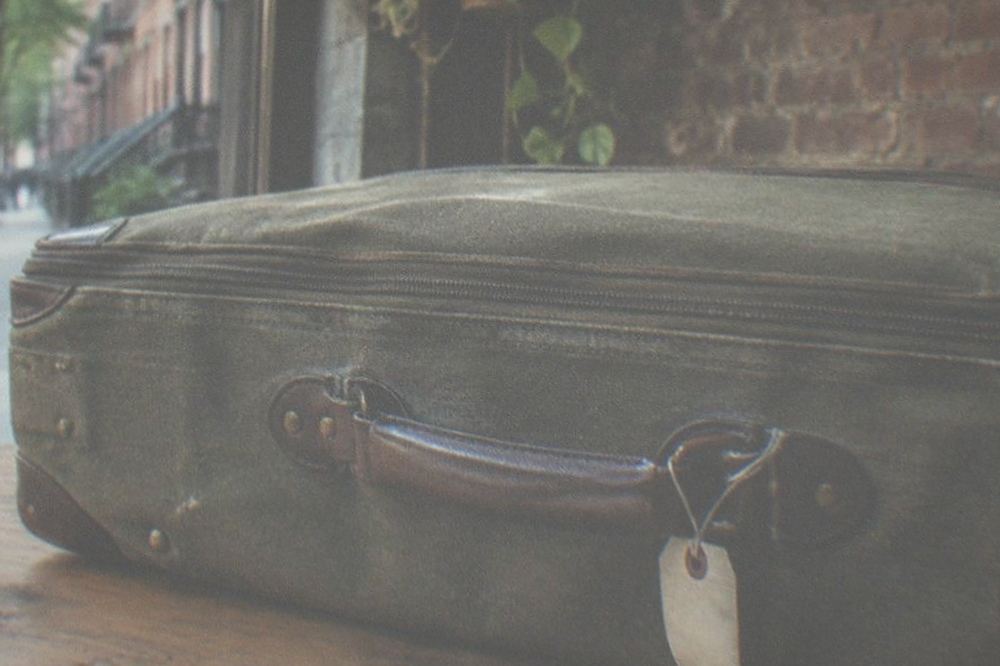
Against the in-hub options, the comparison is straightforward. Amtrak's counter at Penn is $30 per item per 24 hours for the general public, inside the station, with photo ID. A staffed point within walking distance of Penn is $4.90 per day plus the $1.99 fee, so $6.89 all in for the first day. The Amtrak counter wins on proximity to your platform; the network point wins on price by a wide margin, and on the ability to compare hours and ratings before you commit. JFK's Smarte Carte counter cannot be priced in advance at all, which is its own kind of decision.
| Option | What it is | Price | Published hours | Where |
|---|---|---|---|---|
| Amtrak bag storage, Penn | Staffed counter | $20 Amtrak customers, $30 public, per item per 24 hours | Counter hours unpublished; Moynihan hall 5 AM to 1 AM | Inside Penn / Moynihan |
| Smarte Carte, JFK | Staffed counter | Not published; call 718-916-8963 | T1 7 AM to 10 PM, T4 24 hours | JFK Terminals 1 and 4 |
| Staffed network point | Shop or cafe counter | $4.90 per bag per day plus $1.99 checkout fee | Varies by point; most publish hours | 88 points across 8 areas |
| Hotel bag hold | Bell desk courtesy | Often free for guests, limits apply | Front desk hours | Your own hotel |
| Statue of Liberty lockers | Coin lockers | 25-cent deposit, 2 hours | Monument visiting hours | Liberty Island only |
| AMNH lockers | Day lockers | $7 small, $12 large | Until 5 pm | Inside the museum |
The hotel option deserves its honest sentence too. Broadway Plaza Hotel publishes the clearest policy found anywhere: it stores luggage before check-in and on the day of departure only, cannot store overnight, and gives each guest two bags free with $5.00 per bag after that. The New Yorker, a few blocks south, charges $5 per bag "for Registered Guests only", which is one New York hotel saying in its own words that its bag storage is not for people who are not staying there. No New York hotel publishes a policy on holding bags for non-guests, so the honest advice is to ask your own hotel, and expect nothing from a hotel you are not staying at.
How To Plan Around The Locker Absence
Treat the locker question as answered, and plan on three facts instead: your venue's bag rule, your retrieval window, and the transit rules between them. Nine of the eleven major venues this site verified refuse luggage outright, and six publish that they have no place to put it. The MTA has no suitcase size limit at all, and the LIRR timetable states luggage may not be left unattended.
The venue rules are the reason storage gets booked at all. Yankee Stadium permits one soft-sided bag no larger than 16 x 16 x 8 inches and states there is no storage area for any items. Madison Square Garden and Radio City both prohibit bags larger than 22" x 14" x 9" and provide no place to check anything. The Empire State Building prohibits large bags and suitcases and states there are no locker or storage facilities on site. One World Observatory answers the airport question directly: no luggage, no lockers, no storage capabilities. Top of the Rock: no large bags, no storage on site. The Whitney prohibits "luggage of any size or type". On Broadway, the Nederlander houses publish a uniform rule: bags larger than 20"x14"x9" cannot be checked or allowed inside, and luggage is prohibited, while the Shubert Organization publishes no bag rule at all, so never generalize one owner's rule across all of Broadway.
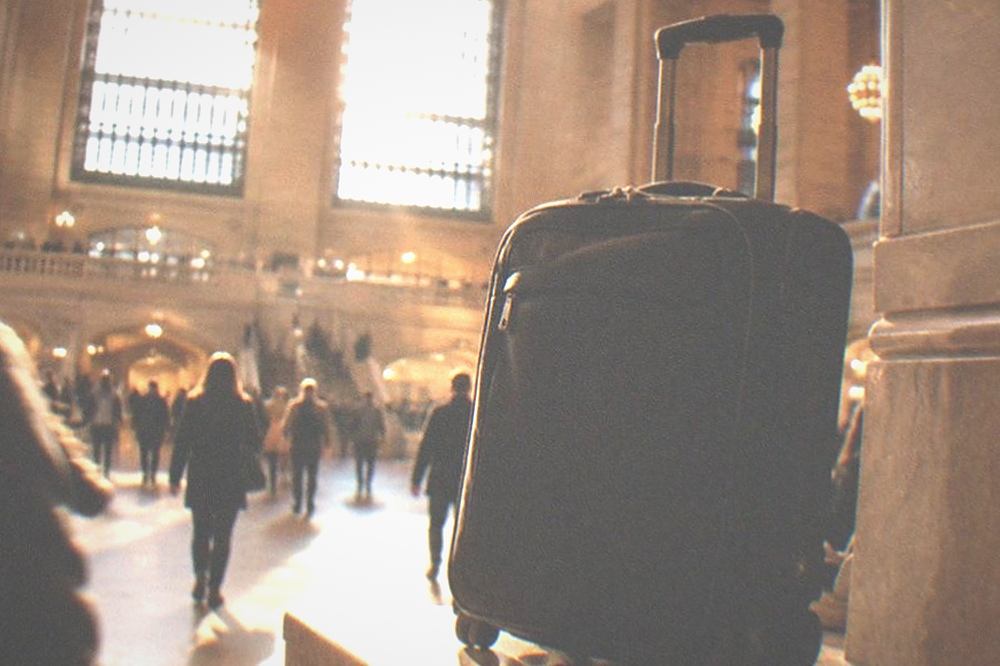
The transit side is more permissive than people fear, and the record is precise about it. The MTA Rules of Conduct, 21 NYCRR Part 1050, contain no suitcase size limit; the only dimension in the rulebook is thirty inches, and it applies to wheeled carts, not luggage. Everything else is a behaviour test, and the fine schedule prices the failures: $75 for carrying an obstructive object, $50 for obstructing seating, $100 for obstruction of operations or traffic. The rulebook contains no unattended-property provision at all, which is an honest negative worth knowing: the subway does not ban unattended bags, it just has rules about blocking things. The Staten Island Ferry rules do prohibit leaving property unattended, as do the Port Authority's terminal rules, so the operators differ, and the difference is real.
The MTA's own rider guide gives the advice this whole topic boils down to, in the agency's words: "Don't travel with more than you can carry on your own, and avoid rush hour if you're transporting something big." That is a transit agency telling you, in print, to plan your bag logistics before you drag a suitcase into a rush-hour car. The rest of this page is the execution of that advice.
What To Do On The Day
Book a staffed point near your first or last transit stop, confirm its hours on the listing, and keep the retrieval window generous. The typical all-in cost is $6.89 for one bag for one day, the fee is charged once per bag rather than per night, and the one rule that voids a guarantee claim instantly is storing electronics, which the terms list as prohibited items.
The day-of sequence is short. Check the venue's own bag rule before you leave, because the dimensions differ and are not interchangeable: 16 x 16 x 8 at Yankee Stadium, 22 x 14 x 9 at the Garden and Radio City, 19 x 17 x 8 onto the 9/11 Memorial, 25" x 17" x 9" at One World Observatory. Drop the bag at a staffed point within walking distance of your entry point rather than doubling back mid-day. Keep the receipt. Leave nothing valuable in the bag, and above all leave the laptop, tablet and phone out of it, because the prohibited-items clause is the one line in the terms that turns a small loss into an uncovered one.
For a longer hold, the arithmetic stays linear: one bag for three days is $16.69 all in, because the $1.99 fee is charged once per bag, not per night. Multi-day holds are supported across the network, and the points that publish hours mostly publish long ones, but the individual listing is the only place to confirm both. If your plan instead runs through Penn Station itself, the Amtrak counter's $30 public rate buys you a drop inside the building, at the cost of a counter whose own hours are unpublished and a hall that closes between 1:00 AM and 5:00 AM.
The last practical note is about what you book versus what you walk to. A storage booking reserves a point inside a named area and radius, not a specific street address, and the address is confirmed after payment. That is the operator's model, not a defect in your day, but it changes the walk: pick the area that touches your route, and let the radius, not a street corner, be the plan.
Common Questions About Public Lockers In NYC
Does New York City have public luggage lockers?
Almost none. The verified public lockers are the coin lockers at the Statue of Liberty monument, the day lockers at the American Museum of Natural History, and the seasonal tennis permit lockers in Central Park. None of them accepts a suitcase, and no transport hub has any locker bank at all.
Are there lockers at Penn Station or Grand Central?
Neither terminal has lockers. Penn Station has the one staffed left-luggage service inside a Manhattan hub: Amtrak's temporary bag storage, $20 per item per 24 hours for Amtrak customers and $30 for the general public with photo ID. Grand Central publishes a flat no on its own FAQ.
Can I store a suitcase at a New York airport?
At JFK, yes, at a staffed Smarte Carte counter in Terminal 1 or Terminal 4, with photo ID and a boarding pass required. No New York airport publishes a storage price, so call the operator at 718-916-8963 for the current rate. LaGuardia and Newark list no baggage storage in their own services.
Why were lockers removed from New York stations?
No primary source exists. Dedicated searches of official and government sources found no document stating that lockers were removed or explaining why, so this site does not repeat the common claim. What each operator does publish is its current position, which is a flat no at every hub except Penn Station's staffed counter.
Can I put my suitcase in the sidewalk lockers I see in New York?
No. The LockerNYC network on city sidewalks is, in the operator's own words, for "the collection of packages from online orders", available 24/7. The lockers are parcel pick-up points, and nothing on the operator's page invites luggage.
What is the working alternative to a locker in New York?
A staffed bag-drop point, booked in advance. Across the eight areas this site publishes, 88 distinct points operate within 800 metres of their area anchors, typically at $4.90 per bag per day plus a $1.99 checkout fee, $6.89 all in for the first day. Every one is a staffed counter with published hours.
For a fuller treatment of the staffed alternative, read how left luggage works in New York, the day locker rental options in New York, and what New York bag size and oversized item rules allow you to carry in the first place. The short version of this entire page: the locker you are searching for does not exist at any hub, the three genuine locker locations do not take suitcases, and the staffed counter, planned in advance, is how New York actually stores bags.