Museum Bag And Coat Check Rules In New York City
New York museums are strict about bags, and the rules differ from building to building. Here is what each venue actually publishes, which ones have coat checks or lockers, and where a suitcase can go when the answer at the door is no.
Short answer
Most major New York museums inspect every bag on arrival and refuse luggage. The American Museum of Natural History has paid lockers at $7 and $12 per day but still bans luggage. MoMA, the Guggenheim, the Whitney and the 9/11 Memorial run coat checks. The Empire State Building, Top of the Rock and One World have no storage at all.
New York's museum district is one of the most bag-hostile stretches of pavement in the country. Almost every major institution inspects bags at the entrance, several publish hard dimensions, and the majority refuse suitcases outright, with no storage on site to catch what they turn away. A visitor told at the door that a rolling case cannot come inside has to solve the problem on the spot, standing on a crowded sidewalk, which is exactly the situation a nearby staffed bag drop exists for.
The rules are not uniform, and that is the trap. The size limit that gets a bag into one building can get it refused at the next one a block away. This guide gathers what each venue actually publishes about bags, coat checks and lockers, what those services cost where they exist, and what the realistic options are when a museum says no.
Which New York Museums Will Make You Check Your Bag?
Nearly all of them. Every major New York museum inspects bags on arrival, and of the eleven venues this site has verified against their own published pages, nine refuse luggage outright and six state plainly that they have no place to store it. Coat checks do exist at MoMA, the Guggenheim, the Whitney and the 9/11 Memorial, and the American Museum of Natural History sells locker space, but none of these will accept a suitcase.
The pattern is consistent across the city: inspection is universal, dimensions vary, and luggage is the one category almost nobody takes. The Whitney's policy page says it in the bluntest words of any New York institution: "Luggage of any size or type is prohibited." The Guggenheim draws its line at a measurement, refusing anything larger than 22 x 14 x 9 inches including handles and wheels, and adding that such items "are not permitted in the museum and cannot be checked."
That last clause matters more than it first appears. A coat check that cannot take an oversized bag is not a solution for a traveller with a suitcase, it is only a solution for someone with a backpack or a coat. When a venue publishes both a size limit and a coat check, read the two together before assuming the coat check will absorb whatever the door refuses.
| Venue | Coat or bag check? | Luggage refused? | Storage on site? |
|---|---|---|---|
| MoMA | Yes, coat checkroom | Not stated in the published text | Checkroom only |
| American Museum of Natural History | Paid lockers, $7 / $12 | Yes | Lockers, no luggage |
| Guggenheim | Yes, free with admission | Yes, cannot be checked | No |
| Whitney | Yes, complimentary, Floor -1 | Yes, any size or type | No |
| 9/11 Memorial & Museum | Yes, Coat Rooms | Yes | Coat Rooms only |
| Metropolitan Museum of Art | Not verifiable | Strict policy, no published detail | Not verifiable |
| Empire State Building | No | Yes | No, stated on its FAQ |
| Top of the Rock | No | Yes | No, stated on its FAQ |
| One World Observatory | No | Yes | No, stated on its FAQ |
| SUMMIT One Vanderbilt | Not published | Yes | Not published |
| Statue of Liberty / Ellis Island | Coin lockers at the monument | Yes, on ferries and islands | Monument lockers only |
The Metropolitan Museum of Art deserves its own honest note. Its website sits behind a security checkpoint that blocks automated reading, so no verified bag dimension or coat check fee can be quoted for it. What can be said is that the Met is known for a strict bag policy and that no reliable number for it exists in this site's research record. Anyone planning a visit with anything larger than a day bag should treat the Met as a venue that will likely say no, and plan accordingly.
MoMA's own visitor page, which does publish its rules, states that "all bags will be inspected upon arrival" and that the museum "reserves the right to prohibit any items and to require visitors to check any bags or items," as published on its visit page. That wording gives the museum total discretion at the door, which is the practical rule at most New York institutions regardless of what any size chart says.
What Is The MoMA Bag Policy In Practice?
MoMA inspects every bag on arrival, reserves the right to require any bag to be checked, and publishes no maximum bag dimension at all. Its coat checkroom is the only on-site option, and the museum caps its own liability at half the purchase price of any checked item up to $150. Items must be claimed before closing, and anything left overnight is not the museum's responsibility.
The absence of a published size limit is the part travellers most often miss. Unlike the Guggenheim, which prints a hard 22 x 14 x 9 inch line, or the Whitney, which bans luggage of any size, MoMA leaves the judgement to security staff at the door. In practice a small backpack or handbag passes through inspection, a rolling suitcase will be turned away, and anything in between depends on the queue, the crowd and the staff member. Planning around a number that does not exist is a mistake; planning around discretion is the only honest approach.
The coat checkroom's terms are worth reading before relying on them. The museum's page states that all checked articles must be claimed before closing, that the museum is not responsible for items left overnight, and that its total liability for anything in the checkroom is half of the item's purchase price up to a maximum of $150. It also warns that the checkroom may refuse additional drop-offs before closing time if capacity is tight. A coat check under those terms is a convenience for coats and small bags, not a place to leave anything valuable or anything you cannot afford to lose.
For a visitor arriving at MoMA with a suitcase, the realistic picture is this: the case will not enter the galleries, it will not go into the checkroom, and the museum has no lockers. The solution has to come from outside the building. MoMA sits in Midtown, and this site's inventory counts 16 staffed storage points within 800 metres of the Midtown Manhattan anchor, rated 4.7 across 596 reviews, at a typical rate of $4.90 per bag per day plus a $1.99 per-bag checkout fee. Dropping the bag before arriving is the difference between a relaxed afternoon and a negotiation on the sidewalk.
The same logic applies across the whole Museum Mile stretch and the Midtown gallery cluster. Storage points near the museums are staffed shops, cafes and hotels, not lockers, and every one of them takes a bag the museums themselves will not. Booking a point near your first stop, rather than near your hotel, keeps the walking manageable.
Do Any New York Museums Have Real Lockers?
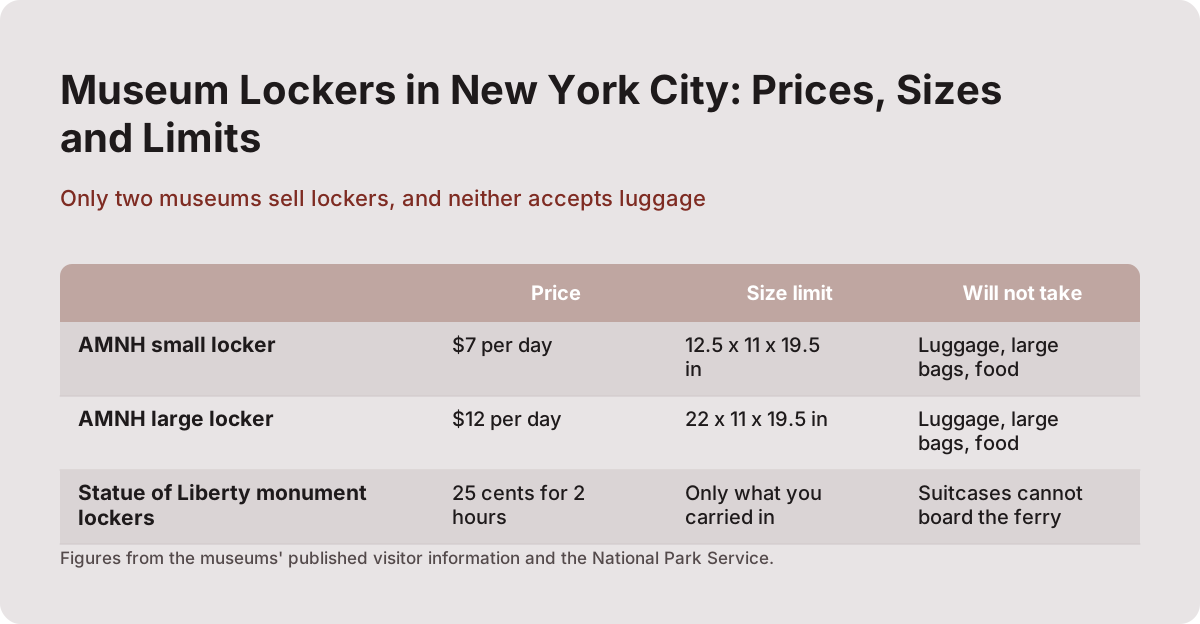
Two do, with heavy caveats. The American Museum of Natural History sells lockers at $7 per day for a small size and $12 per day for a large, available until 5 pm, but refuses luggage at the door. The Statue of Liberty has coin lockers at the monument itself, 25 cents for a two-hour rental, but they only hold what you are already carrying, because suitcases cannot board the ferry at all.
The Natural History Museum's own visitor information document is unusually specific. Its small locker measures 12.5 x 11 x 19.5 inches and costs $7 per day; the large locker measures 22 x 11 x 19.5 inches and costs $12 per day, roughly carry-on sized. The same document states that large bags, backpacks and luggage are not permitted, and that lockers are available until 5 pm with closing times subject to change. So the one museum in New York with a genuine, priced, self-service locker bank still will not solve a suitcase problem: the lockers exist for the coats and shopping bags of people who came without luggage, as its visitor information PDF sets out.
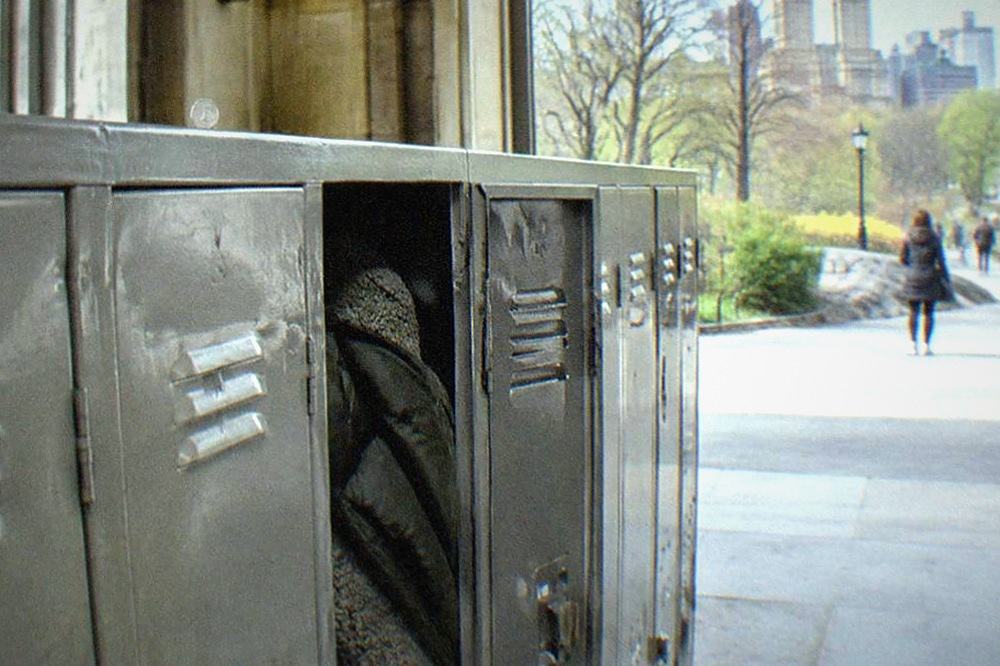
The Statue of Liberty lockers are even narrower in scope. The National Park Service states that there are no locker storage areas at the screening facilities at either The Battery or Liberty State Park, that suitcases and carry-on luggage will not be permitted on the ferries or on either island, and that locker facilities at the entrance to the monument can be rented for two hours with a 25-cent deposit, quarters only. Crown ticket holders must store everything except a camera, phone, water and medication. The lockers are a security convenience inside the monument, not a luggage service, because the luggage never reaches the island in the first place.
| Locker location | Price | Size limit | What it will not take |
|---|---|---|---|
| AMNH small locker | $7 per day | 12.5 x 11 x 19.5 in | Luggage, large bags, food |
| AMNH large locker | $12 per day | 22 x 11 x 19.5 in | Luggage, large bags, food |
| Statue of Liberty monument lockers | 25 cents for 2 hours | Only what you carried in | Anything that cannot board the ferry |
For everyone else, the practical answer near the museum district is a staffed storage point. The Central Park area, which wraps around the Natural History Museum and the whole eastern side of the park, carries 33 staffed storage points within 800 metres of the anchor, rated 4.79 across 762 reviews, at a typical $4.90 per bag per day plus the $1.99 checkout fee. Two of those points, at the 72 St Subway Station and at Cathedral Pkwy / 110 St, charge a cheaper $2.90 per bag per day, and those are the only two in the whole area at that rate.
A day bag dropped at one of those points costs less than the AMNH large locker and takes a bag of any shape, and a point near the 72nd Street entrance puts you a short walk from the museum door. That is the comparison worth making before paying for a locker that will not fit your case anyway.
Which Museums Refuse Luggage Of Any Size?
The Whitney bans luggage of any size or type, in those exact words, and offers a complimentary coat check on Floor -1 that cannot take it. The Guggenheim refuses anything larger than 22 x 14 x 9 inches including handles and wheels, and says such items cannot even be checked. The 9/11 Memorial permits nothing larger than 19 x 17 x 8 inches onto the Memorial and routes large bags into its Coat Rooms, at staff discretion.
The Whitney's policy is the strictest published rule of any New York museum. Its policies page states that all bags will be inspected, that a complimentary coat check is located on Floor -1, that the museum reserves the right to prohibit any items or require any bag to be checked, and that "luggage of any size or type is prohibited." Its liability cap for checked items is half the purchase price up to $250, higher than MoMA's $150, and its prohibited-items list repeats the luggage ban verbatim, as its policy page publishes. A traveller with a rolling case has no route inside this building that does not start with the case being somewhere else.
The Guggenheim's rule is a measurement rather than a category ban, which sounds gentler but works out the same for a suitcase. Items larger than 22 x 14 x 9 inches, measured including handles and wheels, "are not permitted in the museum and cannot be checked." Backpacks, long umbrellas, instruments, scooters, skateboards and packages smaller than that dimension must be checked, and the coat check is free with admission. The practical reading: a standard carry-on roller at 22 x 14 x 9 inches sits exactly on the line, and anything with wheels that measure over it stays outside.
The 9/11 Memorial & Museum handles the problem differently, because its security posture requires it. No baggage larger than 19 x 17 x 8 inches is permitted onto the Memorial at all, and the visitor guidelines require all museum visitors to store large bags, backpacks and anything staff deem too large or dangerous, with storage provided in the Coat Rooms on the Concourse Lobby level and the Pavilion Auditorium level. The guidelines also state that unattended bags found anywhere on the property will be subject to search and removal, and that security staff may decline to admit or store large items. The Coat Rooms serve the museum's own visitors during their visit; they are not a day-storage service for the neighbourhood.
What links all three is that none of them is trying to be difficult about backpacks. The rules exist because galleries are crowded, because security screening is real, and because coat checkrooms are small. The traveller the rules actually bite is the one who arrives straight from a hotel checkout or a train with a case on wheels, and that traveller's fix is always the same: the case has to be dropped somewhere before the first ticket line.
What Bag Sizes Do New York Venues Actually Allow?
Every venue sets its own dimension, and they are not interchangeable: the AMNH refuses bags over 11 x 17 inches, the Guggenheim and Madison Square Garden cap at 22 x 14 x 9, the 9/11 Memorial at 19 x 17 x 8, One World Observatory at 25 x 17 x 9, and Yankee Stadium at 16 x 16 x 8 soft-sided only. A bag that clears one door can be refused at the next.
The spread is wide enough that no single bag size is safe everywhere. The Natural History Museum's limit, more than 11 x 17 inches refused, is the tightest of the museums and turns away many ordinary backpacks, never mind luggage. The Guggenheim's 22 x 14 x 9 line, measured with handles and wheels, is the same dimension Madison Square Garden and Radio City Music Hall use for their venues. One World Observatory is more generous at 25 x 17 x 9 but pairs it with a flat statement that there are no lockers or storage capabilities. Yankee Stadium permits one MLB-compliant soft-sided bag no larger than 16 x 16 x 8 inches, bans all hard-sided bags, and states that "there is no storage area for any items at Yankee Stadium." Other pages covering the same trip are gathered on Luggage Storage Lockers in New York City.
| Venue | Published size limit | Luggage allowed? | Storage on site? |
|---|---|---|---|
| American Museum of Natural History | 11 x 17 in | No | Paid lockers |
| 9/11 Memorial & Museum | 19 x 17 x 8 in | No | Coat Rooms |
| Yankee Stadium | 16 x 16 x 8 in, soft-sided | No | None, stated |
| Guggenheim | 22 x 14 x 9 in | No | Coat check |
| Madison Square Garden | 22 x 14 x 9 in | No | None, stated |
| Radio City Music Hall | 22 x 14 x 9 in | No | None, stated |
| One World Observatory | 25 x 17 x 9 in | No | None, stated |
| MoMA | Not published | Discretionary | Checkroom |
Two honest gaps sit inside this table. MoMA publishes no dimension at all, leaving every bag decision to staff discretion at the door. And the Metropolitan Museum of Art publishes nothing this site could verify, because its website blocks the automated reading that every other venue in the table permits. Neither gap should be filled with a plausible-sounding number; both should be planned around as a likely no for anything with wheels.
The practical takeaway is that a soft day pack of roughly 16 x 16 x 8 inches or smaller is the only shape that clears every published limit in the city. Anything bigger, and certainly anything wheeled, should be treated as needing an off-site plan before the first venue of the day.
What Should You Do If You Arrive With A Suitcase Anyway?
Solve it before the next ticket line, not at it. The museums with no on-site storage leave the problem entirely to the visitor, and the nearest staffed bag drops cluster around the same streets as the museums: 33 points within 800 metres of the Central Park anchor, 16 around Midtown and 44 around Times Square, at a typical $4.90 per bag per day plus a $1.99 per-bag checkout fee.
The arithmetic is worth knowing cold, because it is the same at almost every point in the city. The typical New York rate is $4.90 per bag per day, and a $1.99 fee per bag is added at checkout, once per bag rather than per night. One bag for one day costs $6.89; one bag for three days costs $16.69, because the day rate repeats but the fee does not. Against a $12 museum locker that refuses your case, a staffed point that takes it for $6.89 is the better deal as well as the only one that works.
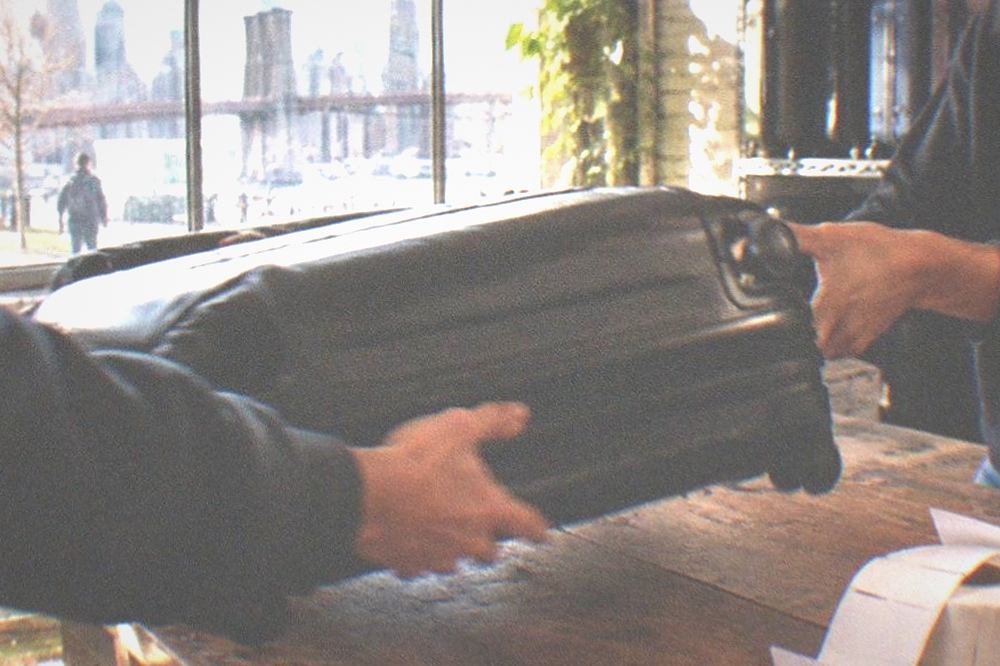
Choosing the point matters more than choosing the rate. A drop near your first museum beats a drop near your hotel, because you collect the bag once and walk straight to the exit you actually need. This site's guide on how to pick a storage spot in New York walks through the same logic for the whole city, but the museum-day version is simple: book inside the neighbourhood you will be standing in at both ends of the visit.
| Museum cluster | Storage points within 800 m | Area rating | Typical rate per bag per day |
|---|---|---|---|
| Central Park / Museum Mile | 33 | 4.79 across 762 reviews | $4.90 ($2.90 at two uptown points) |
| Midtown Manhattan | 16 | 4.7 across 596 reviews | $4.90 |
| Times Square / theatre district | 44 | 4.79 across 2400 reviews | $4.90 |
| Brooklyn | 11 | 4.82 across 79 reviews | $4.90 |
Every one of these points is a staffed counter at a shop, cafe or hotel, not a locker. That is true across the whole city: zero of the points this site lists is a self-service locker, and the two real locker banks in the record, at the Natural History Museum and the Statue of Liberty monument, are the exceptions that prove how rare lockers are in New York. A staffed counter has hours, so check them before booking a late pickup; 33 of the 33 Central Park points and 42 of the 44 Times Square points publish opening hours on their listings.
For the theatre district end of the day, the same logic applies with even more pressure. Broadway houses inspect bags, and the Nederlander rule below refuses luggage outright, so a case that survived the museum cannot come to the evening show either. The Times Square area carries the deepest inventory of any area this site publishes, 44 points within 800 metres rated 4.79 across 2400 reviews, which means short walks and late hours.
Do Broadway Theatres And Observation Decks Take Bags Too?
Increasingly, yes, they have rules, and the direction is stricter. Broadway Direct publishes the same block across Nederlander houses: bags larger than 20 x 14 x 9 inches cannot be checked or allowed inside, and luggage is prohibited. The Empire State Building, Top of the Rock and One World Observatory all refuse luggage and all state they have no storage on site, and SUMMIT One Vanderbilt bans anything larger than a backpack, purse or messenger bag.
The Broadway finding is recent and narrower than it sounds. The Nederlander Organization's own theatre and ticketing site publishes the identical bag rule on every theatre page checked, including the Nederlander, the Lunt-Fontanne and the Gershwin: all bags are inspected on arrival, bags larger than 20 x 14 x 9 inches cannot be checked or allowed inside, and luggage is prohibited. But Shubert, the other major Broadway owner, publishes no bag rule at all, so there is no single "Broadway bag policy," only house-by-house rules. This site keeps the full picture in its guide to Broadway theatre bag rules.
The observation decks are blunter because they have nowhere to put anything. The Empire State Building's FAQ lists large bags, suitcases and carry-on luggage among prohibited items and states that "there are no locker or storage facilities available on-site for personal belongings." Top of the Rock answers the question in one line: large bags and luggage are not permitted, and storage is not available on site. One World Observatory permits bags up to 25 x 17 x 9 inches and states it does not have lockers or storage capabilities. SUMMIT prohibits suitcases, trunks, wheeled duffels and carry-ons, anything larger than a standard backpack, purse or messenger bag, and publishes no storage option. The deck-by-deck detail, including which of these venues sit near which storage clusters, is in this site's guide to observation deck and monument bag rules.
The reason this all belongs in a museum guide is that visitors routinely chain these venues in one day: museum in the afternoon, show or deck in the evening, flight or train overnight. Each link in that chain has its own bag rule, and the case that gets stored near the museum at noon has to be either collected before the show or stored near the theatre instead. Planning the whole chain at once, one drop, one pickup, is cheaper than two, since the $1.99 checkout fee applies per bag per booking.
How Do You Plan A Museum Day Without A Suitcase?
Work backwards from your last venue. Pick one storage point near the final stop of the day, drop the bag there in the morning, travel light through every museum, theatre and deck, and collect it once. At the typical New York rate of $4.90 per bag per day plus the $1.99 checkout fee, a single bag costs $6.89 for the whole day, less than a single AMNH large locker.
The single-drop plan beats the two-drop plan on money and on walking. Two separate bookings mean two checkout fees and two detours; one booking near the evening venue means the bag rides once and sits still. The exception is a day that ends somewhere logistically distant, like a Brooklyn dinner after a Manhattan museum morning, in which case a drop near the middle of the day's route is the compromise.
Brooklyn's own museum-goers have a thinner but well-rated set of options. The Brooklyn area this site publishes carries 11 staffed storage points within 800 metres of its anchor, rated 4.82 across 79 reviews, with all 11 publishing hours, at the same typical $4.90 per bag per day plus the $1.99 fee. The pool is small compared with Manhattan's, so booking ahead matters more there, but the rating is among the highest of the eight areas.
Three habits cover almost every situation this guide has described. First, never bring a wheeled case to a New York museum, theatre or observation deck on the assumption that a coat check will absorb it; the published rules at the Whitney, the Guggenheim, the 9/11 Memorial, the Nederlander houses and every deck say it will not. Second, carry a soft day pack of roughly 16 x 16 x 8 inches or smaller if you want one bag that clears every published limit in the city. Third, treat every dimension in this guide as belonging to the one venue that published it, because the numbers genuinely differ and none of them transfers.
The city makes the last part easy to get wrong, because the venues are close together and the rules are not. The gap between the strictest and most generous published limit in this guide runs from 11 x 17 inches at the Natural History Museum to 25 x 17 x 9 at One World Observatory, and a traveller who clears one and assumes the rest will spend part of the day renegotiating on sidewalks. One storage booking, made before the first ticket line, removes the entire problem for $6.89.
Common Questions About Museum Bag And Coat Check Rules In New York
What is the MoMA bag policy?
MoMA inspects all bags on arrival and reserves the right to require any bag to be checked, but it publishes no maximum bag dimension. Its coat checkroom takes coats and small bags, must be emptied before closing, and caps the museum's liability at half the item's purchase price up to $150. Luggage is not a realistic candidate for the checkroom, so a suitcase needs an off-site plan.
Which New York museums have lockers?
The American Museum of Natural History has paid lockers at $7 per day for the small size and $12 per day for the large, available until 5 pm, but it refuses luggage at the door. The Statue of Liberty has coin lockers at the monument, 25 cents for a two-hour rental, but they only hold what you carried in, because suitcases cannot board the ferry. No other New York museum in this site's research has lockers.
Can I bring a suitcase into a New York museum?
Almost never. The Whitney prohibits luggage of any size or type, the Guggenheim refuses anything over 22 x 14 x 9 inches and will not check it, the 9/11 Memorial caps bags at 19 x 17 x 8 inches, and the Natural History Museum refuses bags over 11 x 17 inches. MoMA leaves it to staff discretion. A suitcase should be dropped at a staffed storage point before you arrive.
Are museum coat checks free in New York?
Some are. The Guggenheim's coat check is free with admission and the Whitney's is complimentary on Floor -1, while the Natural History Museum's lockers are paid at $7 and $12 per day. MoMA does not publish a checkroom fee. None of these services will take a suitcase regardless of price, and each caps its own liability well below most bags' value.
What size bag is allowed at the Metropolitan Museum of Art?
No verified figure exists. The Met's website blocks the automated reading this site's research relies on, so no bag dimension or coat check fee can be quoted for it. The honest planning assumption is that the Met is known for a strict bag policy and that anything larger than a day bag should be stored off-site before a visit.
Where should I store a bag before a museum visit?
At a staffed storage point near your first stop, not near your hotel. The Central Park area has 33 points within 800 metres of its anchor at a typical $4.90 per bag per day plus a $1.99 checkout fee, Midtown has 16 and Times Square has 44. One bag for one day costs $6.89 all in, and a single drop near your last venue of the day beats two bookings on both cost and walking.