Getting Into Manhattan From JFK, LaGuardia And Newark With Luggage
The airport-to-Manhattan decision is really a luggage decision. The AirTrain is built for people with suitcases, the subway has rules about what you drag through it, and the cheapest version of the whole trip ends with the bags left behind at a storage point while you ride in light.
Short answer
The AirTrain between JFK and Jamaica or Howard Beach costs $8.75 one way, and the airport says the system is built for travelers with luggage. LaGuardia and Newark list no baggage storage at all, so the bag rides with you unless you leave it at a staffed storage point, where the typical New York rate is $4.90 per bag per day plus a $1.99 checkout fee.
The trip from a New York airport into Manhattan is usually written up as a money question: train versus car, dollars versus dollars. For anyone carrying suitcases it is a different question entirely, because the three airports do not treat luggage the same way, the transit systems underneath them have real published rules about what you may drag aboard, and the cheapest plan of all only works if the bags never make the journey with you.
The airport itself puts the luggage question on the table. JFK's own AirTrain page states the system is accessible for "travelers with mobility devices, strollers, or luggage", with elevators and escalators at the stations. That is an airport saying, in its own words, that it expects you to arrive with a suitcase. What the page does not solve is what happens at the other end, when the bag is in Manhattan and you still have a day of stairs, turnstiles and venue bag policies ahead of you.
Which Airport Transfer Actually Works With Suitcases?
The honest answer is that all three airports can be crossed with luggage, but only JFK publishes a rail link built for it, and none of the three solves the Manhattan end of the trip. The AirTrain handles the airport half for $8.75, the subway rules govern the city half, and the bag itself is the thing you should plan around, not the fare.
Every option below moves a person. Whether it moves two large suitcases comfortably is a separate matter, and the difference between the two is what this guide is actually about.

The practical comparison is not train against car in the abstract. It is: which option lets you board, ride and arrive without lifting the bag more times than you can manage, and which one dumps you at a Manhattan corner with the bag still attached to you.
| Transfer | Works with large bags? | What the bag costs | The catch |
|---|---|---|---|
| JFK AirTrain plus subway or LIRR from Jamaica or Howard Beach | Yes, elevators and escalators at the stations, airport says so | Nothing extra, fare covers the rider | You still carry the bag through the connecting station |
| JFK AirTrain plus a car from Jamaica or Howard Beach | Yes | Nothing extra on the AirTrain leg | Two-step trip with a transfer |
| Car or taxi direct from any of the three airports | Yes, door to door | Priced by the operator at booking | The fare is the fare, check it before you commit |
| Subway from a Manhattan airport-adjacent stop with bags | Possible, no suitcase size limit exists | Nothing extra | Rush hour, stairs, and the MTA's own advice to avoid travelling big at peak times |
The one thing the table cannot show is timing. JFK publishes a standing construction advisory on its own AirTrain page: "Getting to and from JFK may take longer than usual due to construction at the airport. Please allow for significantly more time." The airport says that to everyone, and it matters double when a stored bag has to be collected before a flight. Add no minutes of your own; the airport deliberately does not, and neither should a planning guide.
How Do You Get From JFK To Manhattan With Luggage?
Take the AirTrain to Jamaica or Howard Beach and connect from there. The one-way AirTrain fare between JFK and those stations is $8.75, published by the airport itself, and the same page confirms the system is designed for travelers with luggage, with elevators and escalators at the stations. From Jamaica, LIRR runs into Manhattan and its timetable tells riders to keep bags in overhead racks and never leave them unattended.
That is the whole mechanical answer, and every piece of it comes from an official source. The airport's own AirTrain page publishes the fare, the luggage wording and the construction advisory on one page, which is unusually convenient for a traveller who wants to check rather than trust a blog.
The luggage half of the sentence deserves attention. "Travelers with mobility devices, strollers, or luggage" is not a marketing line; it is the airport describing who the system is for. The elevators and escalators at the stations are the practical part. Anyone who has hauled a 50 lb case up a subway staircase understands why that sentence is worth more than any fare figure.
The connection at Jamaica is where the trip becomes an MTA matter. The LIRR's current City Terminal timetable publishes the railroad's own luggage rule: "Luggage should be stored in overhead racks and not take up seat space or block the aisles or doorways of trains. Luggage may not be left unattended. Bags and containers are subject to random search by MTA police." Two things follow from that. First, the railroad expects bags and has a place for them. Second, "may not be left unattended" is the rule that makes a day-trip into the city with a suitcase genuinely awkward, because the bag must come with you everywhere or go somewhere licensed to hold it.
If you would rather not make the LIRR-versus-subway decision with two bags in tow, there is a third plan: leave the bags at the airport or at a storage point near your Manhattan arrival station and ride in light. The storage question is covered in detail two sections down, including the one staffed left-luggage service inside a Manhattan rail hub.
Can You Leave A Bag At JFK Or At Penn Station And Travel Into The City Light?
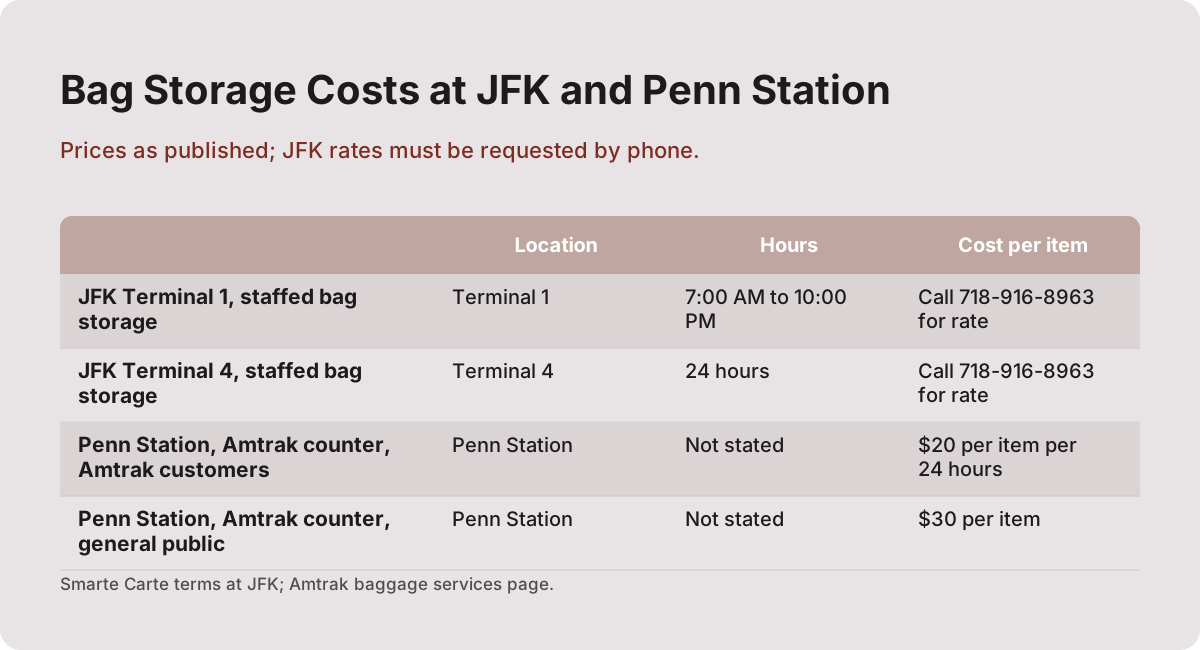
Yes, at both ends, with very different prices. At JFK, Smarte Carte runs staffed bag storage at Terminal 1, open 7:00 AM to 10:00 PM, and Terminal 4, open 24 hours, requiring photo ID and a boarding pass, and publishing no rate, so the price must be asked by phone. At Penn Station, Amtrak's bag storage counter charges $20 per item per 24 hours for Amtrak customers and $30 for the general public with photo ID.
The JFK service is real and bookable, and its terms are unusually specific. The operator's own page lists the conditions: "Prices are Per Item / All Bags Must Be Locked / Full Payment Required Upon Drop-Off / Photo ID and Boarding Pass Required / No Flammable Materials or Alcohol / Firearms, Perishables are Prohibited", and adds that "All Bags will be screened in accordance with TSA safety guidelines" and that "Bags stored for more than 8 hours will be subject to the daily rate."
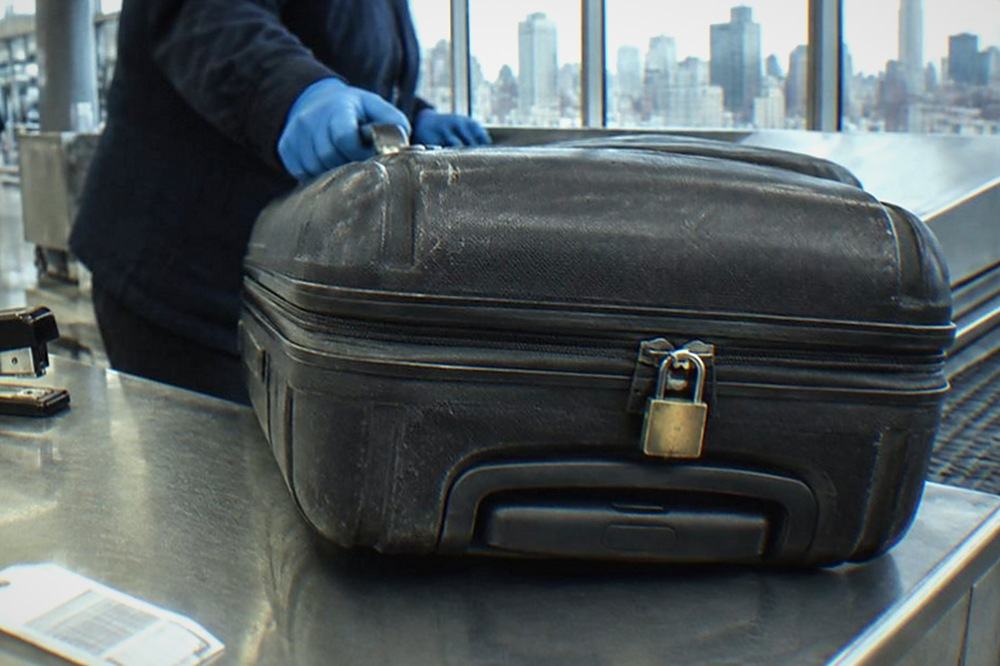
Two honest gaps sit inside that list. The price is not published anywhere: not on the operator's page, not on the airport's pages, and the booking flow yields no figure either. The operator does publish a phone number for the service, 718-916-8963, and the honest advice is to call rather than let anyone guess a rate for you. The second gap is a genuine contradiction between official sources: the operator publishes a Terminal 1 counter with its own hours, while the airport's own Terminal 1 page does not mention baggage storage at all. Both pages are real. Carry both facts.
The Manhattan end of the question has a firmer answer. Amtrak's baggage services page publishes the rates directly: "Temporary bag storage is available to both Amtrak customers (valid ticket required) and the general public (valid photo ID required)", at $20 per item per 24-hour period for Amtrak customers and $30 per item for the general public, with each additional 24-hour period charged at the start of it. Moynihan Train Hall's own page says luggage storage "is provided by Amtrak for all passengers, regardless of the railroad operator that you're traveling with", and points to the Amtrak Customer Service desk.
Those two official sentences do not say exactly the same thing about who qualifies, so quote them as they are rather than flattening them into "anyone can drop a bag". The narrower reading is safe: a person with photo ID and no train ticket can use the counter at the general-public rate, per Amtrak's own page. One timing fact matters if your flight leaves late: Moynihan Train Hall publishes its own hours as 5:00 AM to 1:00 AM daily, and during the overnight gap Amtrak and LIRR services move across the avenue to Penn Station. A bag stored at the Train Hall cannot be collected from a shut building at 2 AM.
The Amtrak baggage and bag storage at Penn Station guide carries the full detail on both services, including what Amtrak's checked baggage is and is not, because checked baggage travels with a train and is not a way to leave a bag behind while you sightsee.
Is LaGuardia Or Newark Easier To Cross With Bags?
Neither lists anywhere official to leave a bag, so at both airports the suitcase rides with you from curb to Manhattan. LaGuardia's own services list carries baggage carts, a baggage office and oversized baggage, but no storage entry, and its FAQ answers the storage question by pointing to carts and porters. Newark's identically structured list also carries no storage entry.
The wording matters. LaGuardia's published FAQ asks "Where can I store my bags at LGA or get help with luggage?" and answers that "the airport provides access to luggage carts and porter services", with lost or delayed bags referred to the airline. That is an airport asked directly where to store a bag and answering with carts. It is not a flat denial, and it should not be written as one. The honest sentence is: LaGuardia lists no baggage storage in its own services. The rest of the planning pages sit on Luggage Storage Lockers in New York City.
Newark is the same shape. Its "Baggage services" list reads baggage carts, baggage office, oversized baggage, with no storage entry, and the "Other Services and Amenities" list has none either. Corroboration from the operator side is blunt: Smarte Carte's own US airport list names Honolulu, JFK, Seattle-Tacoma and Baltimore/Washington, and does not include LaGuardia or Newark.
The practical consequence is that the LaGuardia and Newark traveller has exactly one way to ride into Manhattan light: leave the bag at a storage point in Manhattan itself, after arriving, or at Penn Station, which is on the way for many Newark itineraries via a NJ Transit train. The Newark airport and LaGuardia airport guides cover each airport's own position in full; the short version for planning is that the bag comes with you, so plan the arrival station around where you can put it down.
What Do The Transit Rules Say About Carrying Luggage?
The subway has no suitcase size limit at all. The only dimension in the MTA rulebook is thirty inches, and it applies to wheeled carts, not luggage. Everything else is a behaviour test: obstructing passengers, blocking doors, occupying more than one seat. The fines are real and published: $75 for an obstructive object, $50 for obstructing seating or escalators, $100 for obstructing operations.
This is the section most travel content gets wrong, usually by asserting a suitcase ban that does not exist. The MTA Rules of Conduct, 21 NYCRR Part 1050, contain no unattended-property provision whatsoever: a search of the full text returns zero matches for "unattended" and zero for "abandon". The subway rulebook simply does not address a bag left on a platform. Other New York operators do: the Port Authority Bus Terminal rules state "No person shall abandon any property at the Terminal", and the Staten Island Ferry rules say "No person shall leave any property unattended in the terminals or on the ferries". The difference is real and worth knowing.
What the rulebook does carry is the thirty-inch cart rule, verbatim: "No person may carry on or bring to any facility or conveyance any wheeled cart greater than thirty inches in either length or width... or any item that: (1) is so long as to extend outside the window or door of a subway car, bus or other conveyance; (2) constitutes a hazard to the operation of the authority, interferes with passenger traffic, or impedes service; or (3) constitutes a danger or hazard to other persons." A suitcase is none of those things by default. It becomes a violation only through behaviour: blocking a door, taking a seat, impeding a platform.
| Rule | Section | What it actually says | Fine |
|---|---|---|---|
| Wheeled carts over 30 inches, and obstructive objects | 1050.9(g) | Carts over thirty inches in length or width are banned; items that impede passengers or service are banned | $75 |
| Occupying more than one seat | 1050.7(j)(1) | No person may occupy more than one seat when it would interfere with other passengers | $50 |
| Obstruction of operations or traffic | 1050.6(a) | Blocking the operation of the system | $100 |
| Long objects extending outside a car or bus | 1050.9(g)1 | Anything so long it sticks out a window or door | $75 |
The MTA's own rider guide puts the whole thing in plain words, and it is the best reason-to-store sentence any official body offers: "Don't travel with more than you can carry on your own, and avoid rush hour if you're transporting something big. Make space for other riders and don't block doors, stairs, or passageways." That is not a rule, it is advice from the agency itself, and it describes exactly the traveller this guide is written for. The taking luggage on the subway and commuter rail guide carries the full rule text and the LIRR's overhead-rack rule side by side.
Where Do You Leave The Bags Once You Reach Manhattan?
At a staffed storage point, because Manhattan has essentially no public luggage lockers. The typical New York rate is $4.90 per bag per day plus a $1.99 per-bag checkout fee, and every point is a staffed counter at a shop, hotel or similar business, not a self-service locker. This site lists 88 distinct storage points across eight Manhattan and Brooklyn areas.
The locker finding is the backbone of this site and it is worth stating plainly. Zero of the 178 Radical Storage points in New York City is a locker: the network is 116 shops, 15 cafes, 10 convenience stores, 10 delivery services, 7 restaurants, 6 hotels, 5 offices, 4 rental services, 3 laundries, a tobacco shop and one premises listed only as storage. The city's genuine public lockers are elsewhere entirely: coin lockers at the Statue of Liberty monument, which hold only what you are already carrying because suitcases cannot board the ferry, day lockers at the American Museum of Natural History, which refuse luggage at the door, and a seasonal tennis-centre permit in Central Park. None of them is a luggage option and none is near a station.
So the arrival plan should be built around a storage point near wherever the day actually goes. The counts below are this site's own measured inventory: the points within 800 metres of each area's anchor, which is the number on each area page. Never trust a storage network's own area-page count, because most of the cards shown on an area page are points from elsewhere in the city.
| Manhattan area | Storage points | Rating | Typical rate |
|---|---|---|---|
| Times Square | 44 | 4.79 across 2,400 reviews | $4.90 per bag per day plus $1.99 fee |
| Penn Station | 27 | 4.84 across 3,583 reviews | $4.90 per bag per day plus $1.99 fee |
| Port Authority Bus Terminal | 36 | 4.79 across 2,126 reviews | $4.90 per bag per day plus $1.99 fee |
| Central Park | 33 | 4.79 across 762 reviews | $4.90 per bag per day plus $1.99 fee, with a $2.90 rate at two subway-adjacent points |
| World Trade Center | 4 | 4.72 across 201 reviews | $4.90 per bag per day plus $1.99 fee |
For a JFK arrival via the AirTrain and LIRR, Penn Station is the natural first stop, and it has the deepest inventory of any station area on the site: 27 storage points within 800 metres, rated 4.84 across 3,583 reviews, at the standard $4.90 day rate plus the $1.99 checkout fee. The Penn Station bag drop page lists them with hours and locations.
If the day is a Broadway show or a walk through the theatre district, Times Square is the better anchor, with 44 points within 800 metres, the largest single inventory on the site, rated 4.79 across 2,400 reviews. The Times Square bag drop page carries the full list, and the where to hang out with luggage in NYC post covers what to do if you would rather not part with the bag at all.
For a Lower Manhattan itinerary, the World Trade Center area is thin but real: 4 storage points within 800 metres, rated 4.72 across 201 reviews. Four points is a small pool, so booking ahead matters more there than anywhere else in the city. The World Trade Center bag drop page lists all four with their published hours.
One expectation worth setting before you book anywhere: a reader books an area, not a street address. A detailed complaint visible among recent reviews of the storage network says the company "refuses to share even an approximate storage address until AFTER you've paid". Treat that as planning guidance, attributed to a real review, not as a statistic: the specific point is assigned through the booking, so the area you choose is the commitment you are making.
What Does The Cheapest Version Of This Trip Look Like?
It looks like a split: the bag stays at a staffed counter and you ride the cheap legs alone. The JFK AirTrain leg is $8.75 one way, a bag left at a Manhattan storage point costs $4.90 for the day plus the $1.99 fee, and the same bag left at Amtrak's Penn Station counter costs $30 per 24 hours, or $20 with a train ticket. The bag is almost always the expensive passenger.
Run the arithmetic and the pattern is hard to miss. One bag, one day, at a staffed storage point, all in, is $6.89: the $4.90 day rate plus the $1.99 checkout fee, and the fee is charged once per bag, not per night, so three days for one bag is $16.69 all in. Compare that with the Amtrak counter's $30 general-public rate for a single 24-hour period and the staffed-network points win on price for anything longer than a few hours, while the Amtrak counter wins on location if Penn itself is where you need the bag to sit.
| Plan | The rider pays | The bag pays | Total, one bag, one day |
|---|---|---|---|
| AirTrain plus LIRR, bag rides along | $8.75 AirTrain fare, LIRR fare separate | Nothing extra | Transport only, bag still with you all day |
| AirTrain plus LIRR, bag left at a Penn-area storage point | $8.75 AirTrain fare, LIRR fare separate | $4.90 plus $1.99 fee | $6.89 for the bag, and a light ride into the city |
| Bag left at Amtrak's Penn Station counter | Transport as chosen | $30 general public, or $20 with a ticket | $30 for the bag, per 24 hours |
| Bag left at JFK Smarte Carte, travel light both ways | AirTrain not needed for the bag at all | Rate not published, call 718-916-8963 | Unknown until you ask the operator |
The genuinely cheap version of the trip, then, is the one where the bag never boards the LIRR car at all. That is also the version the MTA's own advice points toward, the one the LIRR's unattended-luggage rule pushes toward, and the one every venue bag policy in the city rewards: the Empire State Building, Top of the Rock and One World Observatory all publish that they have no storage on site, Madison Square Garden and Radio City publish the same, and nine of the eleven venues this site has verified refuse luggage outright. A traveller who rides in light does not spend the day reading coat-check policies at doors.
There is a planning discipline underneath all of it. Decide the arrival station first, because that is where the bag gets put down. Decide the day's geography second, because the bag should sit near the middle of it, not at one end. Book the storage point third, before the trip, because the area is the commitment. And only then buy the transit legs, because a $8.75 AirTrain fare with no suitcase in tow is a different journey from the same fare with one.
The what luggage storage costs in New York City guide breaks the full price picture down, and the overnight and multi-day bag storage in NYC guide covers the longer stays where the once-per-bag fee starts doing real work in your favour.
Common Questions About Getting Into Manhattan From JFK, LaGuardia And Newark With Bags
Can I take luggage on the AirTrain from JFK?
Yes. The airport's own AirTrain page states the system is accessible for "travelers with mobility devices, strollers, or luggage", with elevators and escalators at the stations. The one-way fare between JFK and Jamaica or Howard Beach is $8.75. The airport also publishes a standing construction advisory asking travellers to allow significantly more time.
Is there a size limit for suitcases on the New York subway?
No. The only dimension in the MTA rulebook is thirty inches, and it applies to wheeled carts, not luggage. Suitcases are governed by behaviour rules instead: blocking doors or passages carries a $75 or $100 fine, and occupying more than one seat carries a $50 fine.
Can I leave my bag at JFK and go into Manhattan for the day?
Yes. Smarte Carte runs staffed bag storage at Terminal 1, open 7:00 AM to 10:00 PM, and Terminal 4, open 24 hours. Photo ID and a boarding pass are required, all bags must be locked, and the price is not published anywhere, so call the operator's published number, 718-916-8963, for the rate.
Does LaGuardia or Newark have luggage storage?
Neither lists any. LaGuardia's own services list carries baggage carts, a baggage office and oversized baggage, with no storage entry, and its FAQ answers the storage question by pointing to carts and porter services. Newark's list is the same shape. Write it as "lists none", not as "says there is none".
Where should I leave my bag once I reach Manhattan?
At a staffed storage point near your arrival station or your day's geography. This site lists 88 distinct points across eight areas, at a typical $4.90 per bag per day plus a $1.99 checkout fee. There are no self-service luggage lockers in the network: every point is a staffed counter.
Is it cheaper to store the bag at Penn Station with Amtrak or at a storage point?
For most day trips, a storage point. Amtrak's counter charges $30 per item per 24 hours for the general public, or $20 with a valid Amtrak ticket. A staffed storage point costs $4.90 for the day plus the $1.99 fee, $6.89 all in, and the fee is once per bag rather than per night.