Where Do Most People Store Their Luggage
The honest breakdown of where bags actually go in New York: hotel front desks, the Amtrak counter at Penn Station, and booked shop counters, with real prices and rules for each.
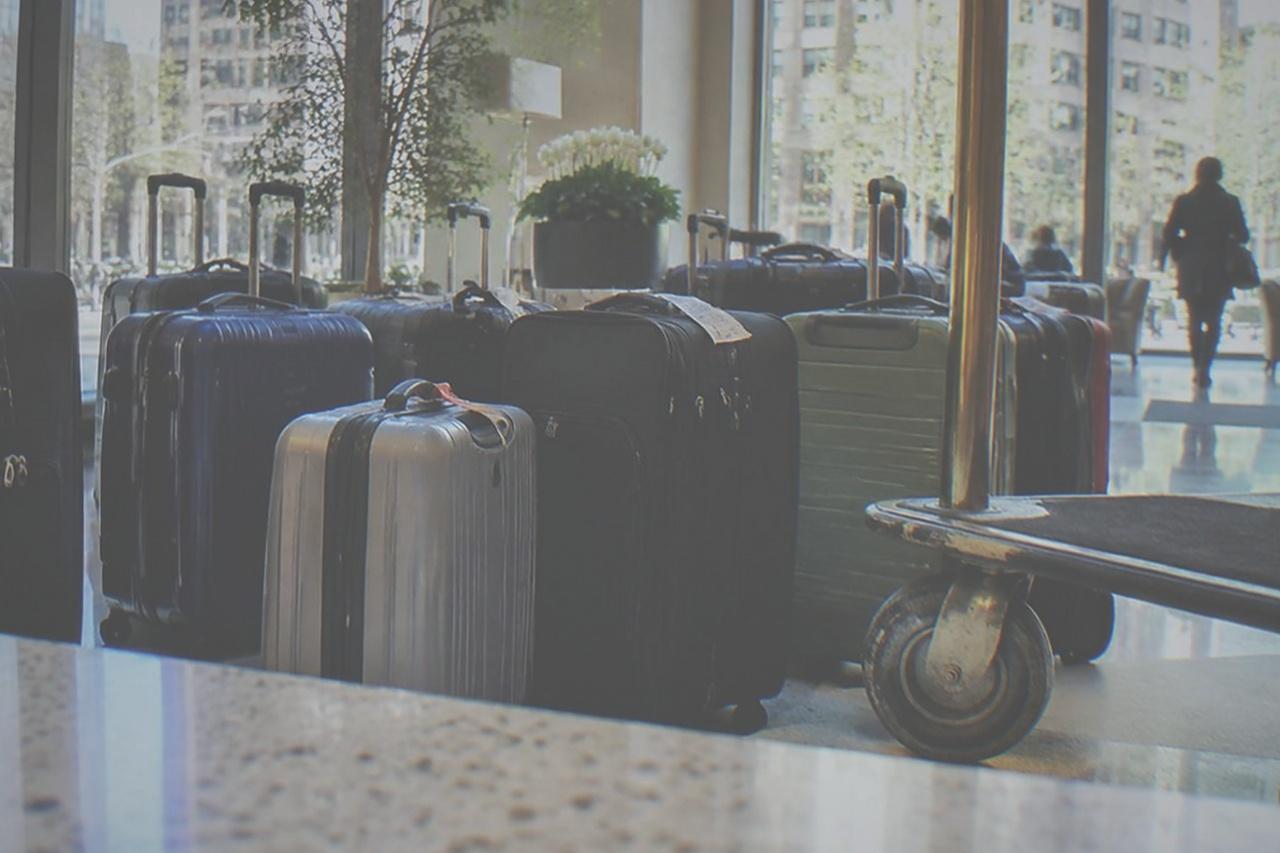
New York has almost no public luggage lockers. That single fact, verified hub by hub against every operator's own page, quietly decides where bags in this city actually go. There is no row of coin lockers at Grand Central, none at the Port Authority Bus Terminal, and the only genuine coin lockers this site's research verified anywhere in the city are the 2-hour, 25-cent deposit lockers at the Statue of Liberty monument, which you cannot use for a suitcase because suitcases cannot board the ferry at all. So the bags go to people instead: a front desk clerk, an Amtrak agent, or the counter of a shop that has signed up to store them. The three categories are not interchangeable, and choosing the wrong one is the most common mistake a visitor with a suitcase makes.
Where Do Most People Store Their Luggage
Most people store their luggage at one of three familiar places: a hotel front desk, a staffed counter at a transport hub, or a booked storage point inside an ordinary shop. In New York, hotel desks dominate for guests, the Amtrak counter at Penn Station serves both ticketed travellers and the general public, and booked shop counters cover the rest, typically at $4.90 per bag per day plus a $1.99 checkout fee.
That is the short answer, but the honest version needs the shape of the demand behind it. A traveller standing in the middle of Manhattan with a suitcase is usually in one of four situations: they have arrived hours before their hotel's check-in time, they have checked out and their flight leaves late, they are passing through between two trains or a train and a flight, or they are trying to enter a venue that refuses luggage outright. Each situation pushes them toward a different category, and the categories have hard limits that the marketing copy never mentions.
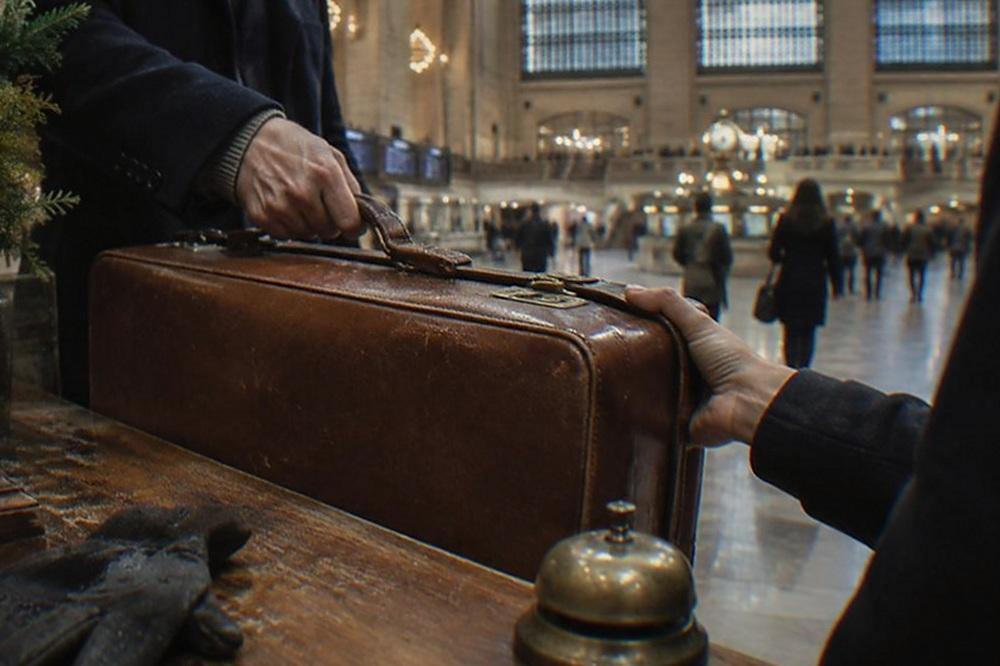
The venue problem is bigger than most visitors expect, and it is the reason booked shop counters exist at the scale they do. Yankee Stadium publishes, in its own words, that "There is no storage area for any items at Yankee Stadium." The Empire State Building states plainly that "There are no locker or storage facilities available on-site for personal belongings." One World Observatory: "We do not have lockers or storage capabilities for your personal items." The Nederlander organization's Broadway theatres publish an identical block on every house checked: "Bags larger than 20"x14"x9" cannot be checked or allowed inside the theatre. Luggage is prohibited." A reader holding a ticket and a wheeled bag has nowhere at the venue to put it, and the venue has told them so on its own website.
There is also a category of storage that looks like it should work and does not. New York City runs a public self-service locker network on its own sidewalks, LockerNYC, but the operator's own page limits it to "the collection of packages from online orders from multiple LockerNYC partners." The lockers on the street are for parcels. A suitcase does not go in one, and no amount of wishful searching changes that. The city does have real lockers, at the Central Park Tennis Center, a museum coat area and a national monument, and none of them is anywhere near a station or sized for a traveller's bag.
For a fuller map of which places have lockers and which have none, the site's guide to which New York places have lockers and which have none covers every hub and venue category in one table. The short version for this page: staffed counters are the whole market, and the real choice is whose counter.
The Hotel Front Desk: The Default Most Travellers Never Think Past
For guests, the hotel front desk is the most-used storage point in New York, and the most variable. Named properties publish policies that range from free holds for two bags to $5 per bag, guests only, no overnight storage. There is no city-wide standard, and no New York hotel publishes a policy on holding bags for people who are not staying there.
The front desk dominates because it is already in the traveller's day. You arrive at noon, check-in is at 3 or 4, and the gap between those two facts is the single most common storage moment in the city. What the desk will actually do depends entirely on the property, and the published policies differ sharply.
Broadway Plaza Hotel publishes the most complete policy found anywhere in this site's research: "We store luggage before check in and on the day of departure only. We cannot store overnight. Each guest is able to store up to two bags on a complimentary basis. Any additional will cost $5.00 per bag." Four limits in two sentences: a time window, an overnight ban, a free allowance, and a per-bag price after it. The New Yorker, a Wyndham hotel, publishes a different shape entirely: "Luggage storage is available for a fee of $5 per bag for Registered Guests only." That sentence carries the strongest sourced statement on the non-guest question anywhere: a New York hotel saying in its own words that its bag storage is not for people who are not staying there.
Franklin Guesthouse in Brooklyn shows the courtesy pattern: "upon check-out or prior to check-in, our bellmen are happy to store luggage for guests." And Fitzpatrick Hotels publishes check-in and check-out times but says nothing about bags at all, which is the most common situation of all. Most hotels are like Fitzpatrick: the policy exists in the head of whoever is at the desk, not on a page you can read before you arrive. That is why "ask your own hotel" is the honest advice rather than "hotels will hold it."
The check-in times themselves do not even agree. Among five named New York properties with published times, check-in runs 3:00 PM at Broadway Plaza and Franklin Guesthouse, 4:00 PM at the New Yorker, Fitzpatrick and the William Vale; check-out runs 11:00 AM at the New Yorker, Franklin Guesthouse and the William Vale, noon at Broadway Plaza and Fitzpatrick. A spread of 3 to 4 in and 11 to noon out, each attributable to the named property and none of it a city-wide norm. The practical consequence: the gap you need covered can be anywhere from one hour to most of a day, and you should check your own hotel's published times rather than assume.
What a hotel desk will not do, on any sourced evidence, is hold a bag for someone who is not a guest. No New York hotel publishes such a policy, and the closest sourced sentence points the other way. A non-guest has no entitlement, and it is entirely at the hotel's discretion. If you are not staying anywhere, you are not in this category at all, and the question becomes station counter versus booked shop counter. The site's longer treatment of the hotel check-in and checkout times and the non-guest question cover both halves in detail.
The Station Counter: Penn Station's Amtrak Desk, The One Real Left-Luggage Service
Penn Station is the only Manhattan transport hub with a left-luggage service, and it is a staffed Amtrak counter, not lockers. Temporary bag storage costs $20 per item per 24 hours for Amtrak customers with a ticket and $30 per item for the general public with photo ID. Grand Central and the Port Authority Bus Terminal both publish flat statements that they have no storage at all.
The Amtrak counter is the closest thing New York has to the classic European left-luggage office, and most travel content misses it entirely. Amtrak's own baggage page states it directly: "Temporary bag storage is available to both Amtrak customers (valid ticket required) and the general public (valid photo ID required)," with rates of $20 per item per 24-hour period for customers and $30 for the general public, charged again at the start of each additional 24-hour period. A person with no train ticket at all can walk up with photo ID and leave a bag, which is the single most contradicted fact on this topic: most guides say New York stations have nothing.
Two official sources do not quite agree on who qualifies, and the honest treatment quotes both. Amtrak's sitewide page says the general public may use it with photo ID. Moynihan Train Hall's own page says "Luggage storage is provided by Amtrak for all passengers, regardless of the railroad operator that you're traveling with," and directs you to the Amtrak Customer Service desk. One page says anyone with ID, the other says all passengers. Quote both, or write the narrower one; never flatten them into "anyone can drop a bag" without the Amtrak sentence beside it.
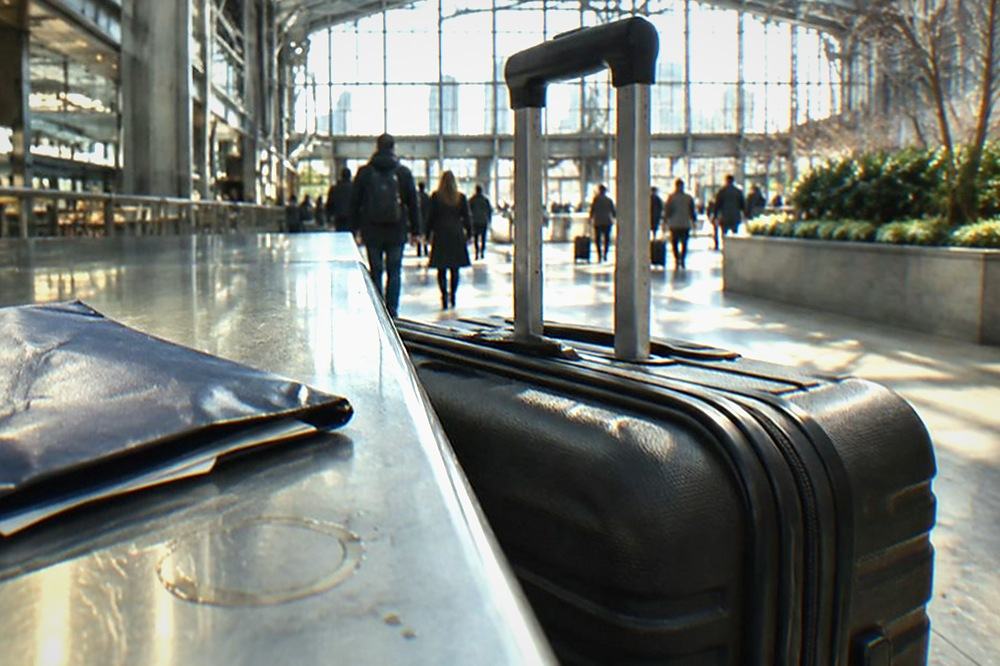
Timing matters more than most people plan for. Moynihan Train Hall publishes its own hours as 5:00 AM to 1:00 AM daily, and states that between 1:00 AM and 5:00 AM Amtrak and LIRR services move across the avenue to Penn Station east of 8th Ave. If your flight leaves at 6 AM and your bag is in the Train Hall, you cannot collect it at 2 AM, because the hall itself is shut. Amtrak publishes no separate hours for the storage counter, so the hall's hours are the only published boundary you have. Where inside the complex the counter physically sits is not published anywhere, and anyone who tells you a concourse or a track number is guessing.
The contrast with the other hubs is stark and worth carrying in your head. Grand Central's own FAQ answers the question flatly: "No, there are no luggage storage services at Grand Central. Please plan ahead if you are arriving with luggage." The Port Authority says it twice, on its terminal page and in its FAQ: "The Port Authority of New York and New Jersey does not provide baggage storage facilities at the bus terminal." The bus terminal's binding rules add one more line that shapes behaviour: "No person shall abandon any property at the Terminal." You cannot leave a bag unattended at Port Authority, and you cannot check it either, which is why the area around the terminal has become one of the densest booked-counter zones in the city.
For readers whose route runs through Penn, the site's deep dive into Amtrak baggage and bag storage at Penn Station covers the checked-baggage confusion, the carry-on limits and the Red Cap service, and the station-by-station comparison of Penn versus Grand Central versus Port Authority puts the three hubs side by side.
The Booked Shop Counter: How Network Storage Actually Works
The third category is a staffed counter inside an ordinary business, a shop, cafe or hotel, booked through a network. In New York every one of these points is staffed, none is a locker, and the real rate is $4.90 per bag per day on 168 of 178 measured point cards, plus a $1.99 per-bag checkout fee. You book an area, not a street address, and the exact address appears after payment.
This is the category that has grown to fill the gap the lockers left, and it deserves a plain explanation, because the product is often described in ways that obscure what you are actually buying. A network, here Radical Storage, signs up local businesses to hold bags. You book a point near where you are going, pay online, walk in, and a person behind a counter takes the bag and tags it. The place types across the network's 178 measured New York points break down as 116 shops, 15 cafes, 10 convenience stores, 10 delivery services, 7 restaurants, 6 hotels, 5 offices, 4 rental services, 3 laundries, 1 tobacco shop and one listed as "Storage" whose page never describes it as self-service. Every single one is staffed. Zero of the 178 is a locker, and the company's locker product exists only in the United Kingdom, as a parcel-locker integration there, not here.
The price is the part most worth knowing cold. Radical Storage advertises "from $2.90" on its New York page, but the same page's own hero reads "from $4.90/day", and the operator now disclaims its own floor price in its own words: "This is the lowest currently available city price, not a promise that every location or bag category has the same rate." The measured reality is that 168 of 178 real point cards show $4.90, which is 94.4 percent of them. On top of the day rate, a $1.99 fee per bag is added at checkout. One bag for one day comes to $6.89 all in; three days comes to $16.69, because the fee is charged once per bag, not per night.
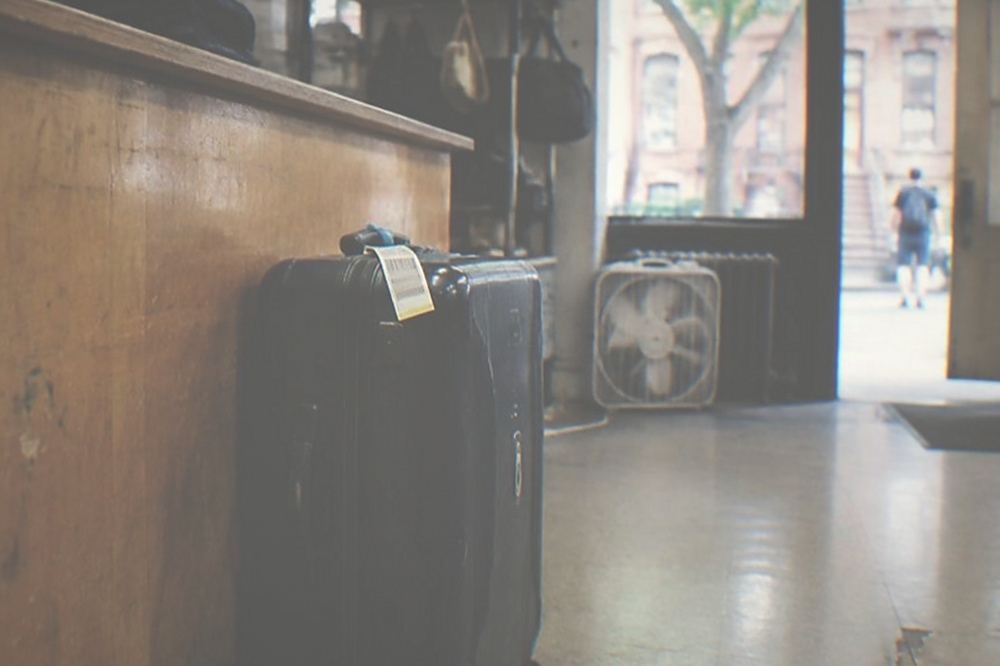
Two fine-print items separate this category from the other two. First, the guarantee is not insurance, and its value in the binding terms is EUR 3,000 per bag, not the $10,000 the marketing pages show; the strings "10,000" and "10,000" appear nowhere in the terms, and the same New York page prints the marketing figure as euros in one place and dollars in another. Second, the terms prohibit storing electronics outright, verbatim: "Technological material (iPhone, iPad, Tablet, PC, smartphones)." A prohibited item voids the entire claim, so a laptop goes to the Amtrak counter or stays with you, not into a shop-counter booking. The site's page on what the Radical Storage guarantee actually covers and the guide to what you cannot leave in a stored bag walk through both in detail.
Expectation-setting matters here too. A recent review on the operator's Trustpilot page, dated within days of this site's research, complains that the company "refuses to share even the approximate storage address until AFTER you've paid." That is a real, checkable pattern: you book an area and a price, and the specific shop appears after payment. Plan for a short walk from where you are to wherever the point turns out to be, and read the step-by-step of how a New York bag drop-off works before your first one.
What The Choice Costs, And When Each Category Wins
All-in costs across the three categories: a hotel desk is free to $5 per bag for guests, the Amtrak Penn counter is $20 or $30 per item per 24 hours, and a booked shop counter is $6.89 for one bag for one day. The cheapest option is the one you already have a relationship with; the most flexible is the counter you can book near wherever your day actually goes.
Here is the comparison in one place, using only figures the named sources publish:
| Category | All-in cost | Who can use it | The limit that bites |
|---|---|---|---|
| Hotel front desk | Free to $5 per bag, property by property | Guests only, at the hotel's discretion | No published policy at most properties; no overnight at Broadway Plaza |
| Amtrak counter, Penn Station | $20 per item per 24h with a ticket, $30 with photo ID | Amtrak customers and the general public | Hall hours 5 AM to 1 AM; counter location unpublished |
| Booked shop counter | $4.90 per bag per day plus $1.99 checkout fee | Anyone who books | Electronics prohibited; address revealed after payment |
The pattern in the table is that price and flexibility move in opposite directions. The hotel desk is usually free or nearly free, but it only exists for guests and only at the hotel's discretion. The Amtrak counter takes anyone with ID, but it is one physical place with published hours and a per-item price that adds up fast if you are storing several bags or several days. The booked counter is the only category with genuine geographic choice, dozens of points around Times Square, 27 around Penn Station, 36 around Port Authority, and the only one you can reserve in advance for a specific neighbourhood, which is exactly what a stadium-bound or theatre-bound visitor needs.
The transit reality is the final nudge, and it comes from the authority itself. The MTA's rider guide advises travellers: "Don't travel with more than you can carry on your own, and avoid rush hour if you're transporting something big." The rulebook behind it, 21 NYCRR Part 1050, contains no suitcase size limit at all; its only dimension, thirty inches, applies to wheeled carts, not luggage. What the rules do price is behaviour: carrying an obstructive object is a $75 fine, obstruction of seating, facilities, elevators or escalators is $50, and obstruction of operations or traffic is $100. The LIRR's current City Terminal timetable, effective March 23, 2026, adds its own line for the Penn crowd: "Luggage should be stored in overhead racks and not take up seat space or block the aisles or doorways of trains. Luggage may not be left unattended."
So the answer to where most people store their luggage is really three answers stacked by situation. If you have a hotel, the desk is first, free and closest, and you should confirm its window in the same breath you confirm your check-in time. If you are moving between trains or need a bag retrievable at an odd hour near a station, the Amtrak counter at Penn is the one staffed hub service, and the $30 general-public rate is the price of not needing a booking at all. If your day runs toward a venue that refuses luggage, and most of the big ones do, a booked shop counter near the venue is the category that exists precisely for that gap. The site's Luggage Storage Lockers in New York City homepage ties all eight published areas together if your route is not yet decided.
Common Questions About Where People Store Luggage
where do most people store their luggage
Most bags in New York go to one of three staffed places: the traveller's own hotel front desk, the Amtrak bag-storage counter at Penn Station, or a booked counter inside a shop or cafe. The hotel desk dominates for guests, the Amtrak counter serves both ticketed travellers and the general public with photo ID, and booked shop counters, at a typical $4.90 per bag per day plus a $1.99 checkout fee, fill everything else.
Do any New York stations have lockers?
No. Grand Central, the Port Authority Bus Terminal, the GWB Bus Station and Journal Square all publish that they have no storage, and none has a locker bank. Penn Station has a staffed Amtrak counter instead, and JFK has staffed Smarte Carte counters in Terminals 1 and 4. The only genuine coin lockers verified anywhere in the city are the 2-hour, 25-cent deposit lockers at the Statue of Liberty monument, which cannot hold a suitcase because suitcases cannot board the ferry.
Is it cheaper to use a hotel desk or a booked counter?
For a guest, the hotel desk is usually cheaper: Broadway Plaza Hotel stores two bags free and charges $5 per bag after that, while the New Yorker charges $5 per bag for registered guests. A booked shop counter runs $4.90 per bag per day plus a $1.99 checkout fee, $6.89 all in for one bag for one day. But hotel desks hold bags for guests only, and no New York hotel publishes a policy for non-guests, so the comparison only applies if you are staying somewhere.
Can I store a bag at Penn Station without a train ticket?
Yes, on Amtrak's own published terms: temporary bag storage is available to the general public with valid photo ID at $30 per item per 24-hour period, versus $20 per item for Amtrak customers with a ticket. Moynihan Train Hall's page describes the service as being for all passengers and directs you to the Amtrak Customer Service desk, so carry photo ID either way. The Train Hall is open 5 AM to 1 AM daily.
Why can't I find lockers on New York sidewalks?
The lockers you may have seen on city sidewalks are LockerNYC, a DOT partner programme, and the operator's own page limits them to collecting packages from online orders. They are parcel lockers, not luggage lockers. New York's genuine lockers are at a tennis centre, a museum coat area and a national monument, and none is a luggage option for a traveller with a suitcase.
What can't I leave in a booked shop counter?
The binding terms of the largest network prohibit electronics outright, listing "Technological material (iPhone, iPad, Tablet, PC, smartphones)", and a prohibited item voids the entire guarantee claim. The guarantee itself is not insurance and is capped at EUR 3,000 per bag in the terms, not the $10,000 figure the marketing pages show. Keep laptops and tablets with you, or take them to the Amtrak counter, which publishes no such prohibition.